SIR ISAAC NEWTON
How a solitary genius uncovered the laws of motion and gravity, invented a new mathematics, and laid the foundations of modern science.
Working alone during a plague that closed his university, a young Isaac Newton conceived ideas about gravity, light, and mathematics that would rule science for more than two centuries.
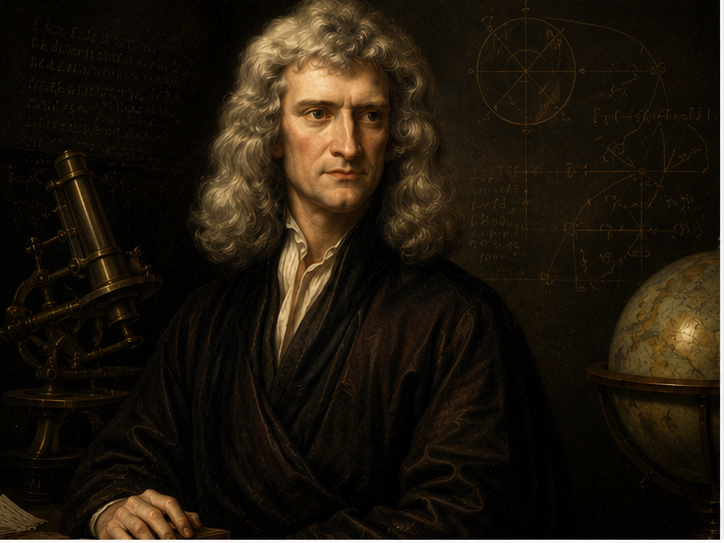
Sir Isaac Newton (1643-1727) was an English physicist, mathematician, and astronomer widely regarded as one of the most influential scientists of all time. In his masterwork, the "Principia" (1687), he set out the three laws of motion and the law of universal gravitation. He built the first practical reflecting telescope, transformed the study of light and color, and independently developed calculus. He later served as Master of the Royal Mint and President of the Royal Society, and was the first scientist to be honored with a knighthood for a career in science.
Explore this story
Before Isaac Newton, the heavens and the Earth seemed to obey different rules. After him, they obeyed the same ones.
Born into a farming family in rural England, Newton was a quiet, intensely focused child who preferred building models to working the land. At Cambridge he encountered the great questions of his age - and when plague closed the university, he retreated to his family home and, in an astonishing burst of creativity, laid the groundwork for calculus, a new theory of light, and the idea of universal gravitation.
Years later, prompted by fellow scientists, he gathered his thinking into the "Principia," a book that explained the motion of everything from falling apples to orbiting planets with a single set of laws. It became one of the most important works in the history of science.
Newton was also a difficult, secretive man who feuded with rivals, pursued alchemy and theology in private, and later ran England's mint with ruthless efficiency. This is the complete story of the genius who explained the universe.
- 25 December 1642 (old calendar) / 4 January 1643 (modern calendar)Birth at Woolsthorpe
Isaac Newton is born prematurely in Lincolnshire, England.
Newton was born at Woolsthorpe Manor into a farming family. His father had died before his birth, and he was a small, frail infant.
This modest rural beginning gave little hint of the revolution in science he would lead.
England used the older Julian calendar at the time, which is why his birth date is given differently under the modern calendar.
- 1661Entering Cambridge
Newton begins his studies at Trinity College, Cambridge.
In 1661 Newton enrolled at Trinity College, University of Cambridge, where he encountered both traditional learning and the new ideas of the Scientific Revolution.
Cambridge exposed him to the mathematics and natural philosophy he would soon transform.
He initially paid his way in part by performing services for wealthier students.
- 1665-1667The plague years of discovery
With Cambridge closed by plague, Newton makes his greatest early breakthroughs.
When an outbreak of plague closed the university, Newton returned to Woolsthorpe. In this period he made extraordinary progress in mathematics, developed early ideas about gravity, and began his work on light and color.
These years are often called his "years of wonder," laying the foundation for his life's work.
The famous story of an apple prompting his thoughts on gravity is associated with this time at Woolsthorpe.
- 1668-1672The reflecting telescope and light
Newton builds a new kind of telescope and presents his theory of color.
Newton constructed the first practical reflecting telescope, using mirrors rather than lenses. Using prisms, he demonstrated that white light is composed of a spectrum of colors, publishing his findings on light in 1672.
His work revolutionized the study of optics.
His telescope impressed the Royal Society, which helped elect him a Fellow in 1672.
- 1669Lucasian Professor
Newton becomes Lucasian Professor of Mathematics at Cambridge.
In 1669 Newton was appointed to the prestigious Lucasian Chair of Mathematics at Cambridge, a position he held for decades.
The post gave him standing and freedom to pursue his research.
The same chair was later held by other renowned scientists in history.
- 1687Publication of the "Principia"
Newton publishes his masterwork on motion and gravitation.
In 1687 Newton published "Philosophiae Naturalis Principia Mathematica" ("Mathematical Principles of Natural Philosophy"), setting out the three laws of motion and the law of universal gravitation. He used them to explain planetary orbits, tides, comets, and more.
The "Principia" is one of the most important scientific books ever written and founded classical mechanics.
The astronomer Edmond Halley encouraged and helped fund its publication.
- 1689Member of Parliament
Newton is elected to represent Cambridge University in Parliament.
In 1689 Newton became a Member of Parliament for the University of Cambridge, having opposed royal attempts to impose Catholic influence on the universities.
It marked his growing role in public life.
His parliamentary contributions were reportedly modest.
- 1696Warden of the Royal Mint
Newton moves to London to take charge of the nation's coinage.
In 1696 Newton was appointed Warden of the Royal Mint and moved to London, taking a leading role in reforming England's currency and pursuing counterfeiters.
It began his influential second career in public administration.
He pursued counterfeiters with notable zeal, helping send some to severe punishment.
A Quiet Country Boy
Isaac Newton was born prematurely in Lincolnshire in the winter of 1642-1643, his father already dead. A serious, solitary child, he showed little interest in farming and much in building models and asking questions. His path led away from the family land toward the University of Cambridge.
The Years of Wonder
When plague closed Cambridge in the mid-1660s, Newton retreated home and entered one of the most creative periods any scientist has ever known. In just a few years he made breakthroughs in mathematics, formed early ideas about gravity, and began unraveling the nature of light. Much of his life's work grew from these years.
Light, Telescopes, and Fame
Back at Cambridge, Newton built the first practical reflecting telescope and showed that white light is a mixture of colors. His work drew the attention of the Royal Society, and he became Lucasian Professor of Mathematics - though his findings also sparked bitter disputes with rivals like Robert Hooke.
The Principia
Urged on by the astronomer Edmond Halley, Newton assembled his thinking into the "Principia" in 1687. In it he laid out the three laws of motion and universal gravitation, uniting the physics of Earth and the heavens. It was a triumph that made him the leading scientist of his age.
A Second Career in London
In the 1690s Newton moved to London to run the Royal Mint, first as Warden and then as Master. He reformed the currency and hunted counterfeiters with fierce determination, becoming wealthy and powerful far beyond the world of science.
The Grand Old Man of Science
As President of the Royal Society and a knighted celebrity, Newton dominated English science until his death in 1727. His laws would remain the foundation of physics for over two centuries, until Einstein extended and refined them. He was buried in Westminster Abbey among the nation's greatest figures.
- Newton was born prematurely and not expected to survive.
- His father died before he was born.
- He made his greatest early discoveries while plague closed his university.
- He independently invented calculus.
- He built the first practical reflecting telescope.
- He proved white light is made of many colors.
- His "Principia" united the physics of Earth and the heavens.
- He formulated the three laws of motion.
- He spent enormous effort on alchemy, a pursuit later kept quiet by admirers.
- He wrote more on theology and biblical chronology than on physics by some measures.
- He held unorthodox religious views for his time.
- He paid part of his early Cambridge costs by serving wealthier students.
- His birth and death dates differ depending on the calendar used.
- He reportedly conducted risky experiments on his own eyes to study light.
- He was reluctant to publish, partly to avoid criticism.
- He served in Parliament but is said to have spoken very little.
An apple fell on Newton's head and he instantly discovered gravity.
The apple story is linked to his home during the plague years, but his theory took years of work; the dramatic version is simplified.
Newton alone invented calculus.
He developed it independently, but Leibniz developed it separately at around the same time.
Newton only did physics and math.
He devoted vast effort to alchemy and theology as well.
Newton was a warm, collaborative figure.
He was often solitary, secretive, and quarrelsome.
The "Principia" was easy to publish.
It required the encouragement and financial help of Edmond Halley.
Newton's laws are simply "wrong" now.
They were extended by relativity but remain accurate for most everyday conditions.
Newton was born wealthy.
He came from a farming family and gained wealth mainly through the Mint.
His knighthood was purely for science.
It likely also involved political factors.
Newton was a modern-style secular scientist.
His worldview was deeply religious, if unorthodox.
Newton published his ideas immediately.
He often delayed publication for years.
Note: The following are widely attributed to Newton; wording can vary across historical sources.
Quote 1: Newton wrote that if he had seen further, it was by standing on the shoulders of giants.
Meaning: He acknowledged building on the work of earlier thinkers - though the remark was also read as a barbed comment amid his rivalry with Hooke.
Quote 2: He is reported to have described himself as a boy playing on the seashore, finding a smoother pebble now and then, while the great ocean of truth lay undiscovered before him.
Meaning: Even at the height of his fame, he expressed humility about how much remained unknown.
Quote 3: In the "Principia," he framed his work around discovering the mathematical laws underlying nature.
Meaning: His central conviction was that the universe operates according to discoverable mathematical principles.
Newton's legacy is foundational. His laws of motion and gravitation shaped physics, astronomy, and engineering for centuries and remain essential tools today. He helped establish the modern scientific method of mathematical explanation and experiment, and his stature made science a prestigious pursuit. His name is attached to the unit of force and to countless principles across science.
Newton influenced virtually every scientist who followed, from the Enlightenment thinkers who idolized him to the physicists who eventually extended his work. His mathematical approach to nature became the template for modern physical science, and his optics and mechanics underpinned technology for generations.
- Did you know Newton was born prematurely and not expected to live?
- Did you know his father died before he was born?
- Did you know he made key discoveries during a plague?
- Did you know he invented calculus independently?
- Did you know he built the first practical reflecting telescope?
- Did you know he proved white light contains all colors?
- Did you know the "Principia" appeared in 1687?
- Did you know Halley helped fund the "Principia"?
Newton vs Einstein: Newton described gravity as a force and gave laws that work for everyday conditions; Einstein reinterpreted gravity as the curving of spacetime, extending and refining Newton's work.
Newton vs Galileo: Galileo pioneered experimental physics and astronomy; Newton built on his work to create a complete mathematical system of mechanics.
Newton vs Leibniz: Both independently developed calculus; their dispute over priority became one of the most famous in the history of science.
Newton vs Kepler: Kepler discovered the laws describing planetary orbits; Newton explained why those orbits occur, using universal gravitation.
- Science
- Founded classical mechanics and transformed optics and mathematics.
- Technology
- Enabled centuries of engineering, navigation, and astronomy.
- Philosophy
- Inspired the Enlightenment's faith in reason and natural law.
- Education
- His work became the backbone of physics teaching for generations.
- Economy
- As Master of the Mint, he influenced England's currency.
- Astronomy
- Explained planetary motion, tides, and comets.
- Society
- Elevated the prestige of science and the scientist.
- Legacy
- His framework guided physics until the twentieth century.
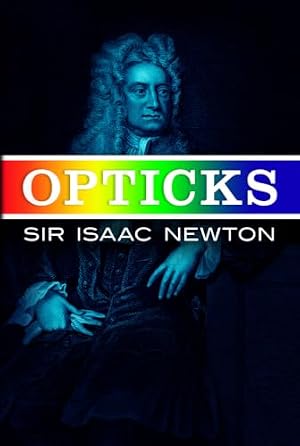
Opticks
by Isaac Newton
As an Amazon Associate, TimelineSphere earns from qualifying purchases.
- The life and science of Isaac Newton.
- The Scientific Revolution and the "Principia."
- Newton's work on light and optics.
- The Newton-Leibniz calculus dispute.
- Newton's secret studies in alchemy.
1642/1643 born at Woolsthorpe; 1661 enters Cambridge; 1665-1667 makes key discoveries during the plague; 1668-1672 builds reflecting telescope and presents theory of color; 1669 becomes Lucasian Professor; 1687 publishes the "Principia"; 1689 elected to Parliament; 1696 becomes Warden of the Mint; 1699 becomes Master of the Mint; 1703 becomes President of the Royal Society; 1704 publishes "Opticks"; 1705 knighted; 1727 dies and is buried in Westminster Abbey.
- Entering Cambridge in 1661.
- The plague years of discovery in the mid-1660s.
- Building the reflecting telescope.
- Presenting his theory of light in 1672.
- Becoming Lucasian Professor.
- Publishing the "Principia" in 1687.
- Moving to London to run the Mint.
- Becoming President of the Royal Society.
- Publishing "Opticks" in 1704.
- His knighthood in 1705.
- The calculus dispute: his bitter priority battle with Leibniz divided European science.
- Rivalry with Hooke: disputes over credit for ideas in optics and gravitation.
- Alchemy and theology: his extensive private studies were long downplayed and remain debated by historians.
- Conduct at the Mint: his harsh pursuit of counterfeiters has drawn scrutiny.
- Fellow of the Royal Society (elected 1672); later its President.
- Knighted by Queen Anne (1705).
- Lasting honors include the naming of the SI unit of force, the newton, after him.
Newton is celebrated worldwide as one of the greatest scientists in history. He is especially revered in Britain and throughout the scientific community, and his name is familiar to students everywhere through his laws of motion and gravity.
Newton's laws still describe the motion of objects in everyday life, from vehicles to spacecraft trajectories. His mathematical approach to nature underlies modern science and engineering. His life also illustrates how curiosity, focus, and rigorous reasoning can transform human understanding.
1. In roughly what year was Newton born (modern calendar)?
2. Where was Newton born?
3. What is Newton's most famous book?
Did You Know: Much of Newton's revolutionary work began while he was stuck at home during an outbreak of plague.
Imagine If: Imagine if Edmond Halley had not urged Newton to publish - the "Principia" might never have appeared.
Historic Moment: In 1687, Newton's "Principia" united the physics of falling apples and orbiting planets under one set of laws.
On This Day: Newton died in 1727 and was buried in Westminster Abbey, a rare honor for a scientist.
Sir Isaac Newton (1643-1727) was an English scientist who formulated the laws of motion and universal gravitation, invented calculus, transformed optics, and wrote the "Principia," founding classical mechanics.
Born in rural England, Newton made groundbreaking discoveries during the plague years of the 1660s, built the first reflecting telescope, and showed that white light is made of colors. His 1687 "Principia" set out the laws of motion and gravitation. He later ran the Royal Mint, led the Royal Society, and was knighted in 1705. His physics dominated science for over two centuries.
Isaac Newton was born at Woolsthorpe around the turn of 1642-1643 and studied at Trinity College, Cambridge. When plague closed the university in the mid-1660s, he made extraordinary advances in mathematics, gravity, and optics. He built the first practical reflecting telescope and demonstrated that white light is composed of a spectrum of colors, becoming Lucasian Professor in 1669. In 1687, encouraged by Edmond Halley, he published the "Principia," laying out the three laws of motion and universal gravitation and uniting terrestrial and celestial physics. He served in Parliament, became Warden and then Master of the Royal Mint, and led the Royal Society from 1703. Knighted in 1705, he pursued alchemy and theology privately and feuded with rivals such as Hooke and Leibniz. He died in 1727 and was buried in Westminster Abbey. His work remained the foundation of physics until Einstein.
People searching "Isaac Newton" typically want: a clear biography and timeline; his laws of motion and gravity explained; whether he invented calculus; the story of the apple; his work on light; his role at the Mint and Royal Society; and his lasting influence on science.
- 1.Encyclopaedia Britannica - "Isaac Newton" and "Newton's laws of motion."
- 2.Stanford Encyclopedia of Philosophy - "Isaac Newton" (life, calculus, and the Principia).
- 3.The Isaac Newton Institute and University of Cambridge - Newton's life, offices, and knighthood.
- 4.NASA Glenn Research Center - summary of Newton's laws of motion.
- 5.PBS NOVA - timeline of Newton's life and the note on calendar dating.
Related timelines
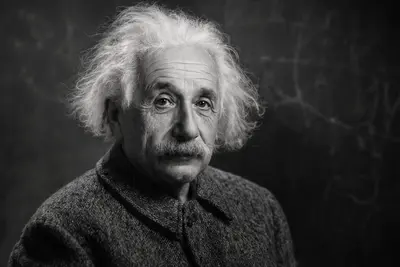
How a patent clerk in Bern reimagined space, time, light and gravity - and became the most famous scientist who ever lived.
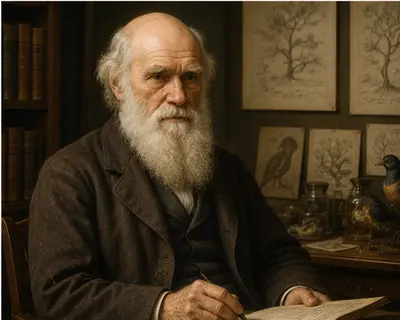
From a five-year journey around the world to the theory of evolution by natural selection, this is the life of the naturalist who transformed biology forever.
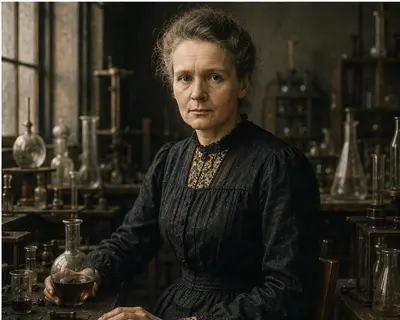
A poor girl from occupied Poland who became the first person in history to win two Nobel Prizes - and paid for her discoveries with her life.
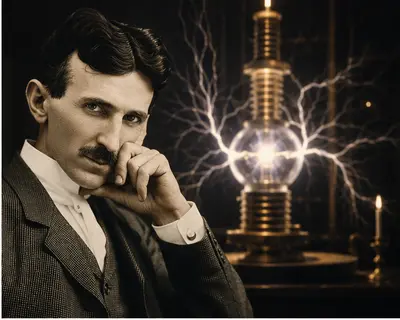
The brilliant, eccentric inventor whose alternating-current system lit up cities - and who dreamed of wireless power decades ahead of his time.
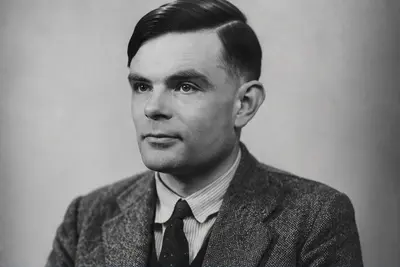
The mathematician who imagined the modern computer, cracked Nazi codes, and was persecuted for who he was - only to be honored decades too late.
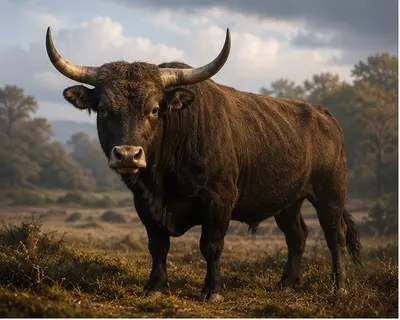
The wild ancestor of domestic cattle.