Microsoft — How Two Friends Turned a Magazine Cover Into the World's Software Empire
From a two-person startup in Albuquerque to a multi-trillion-dollar cloud and AI powerhouse, this is the story of the company that taught the world to compute.
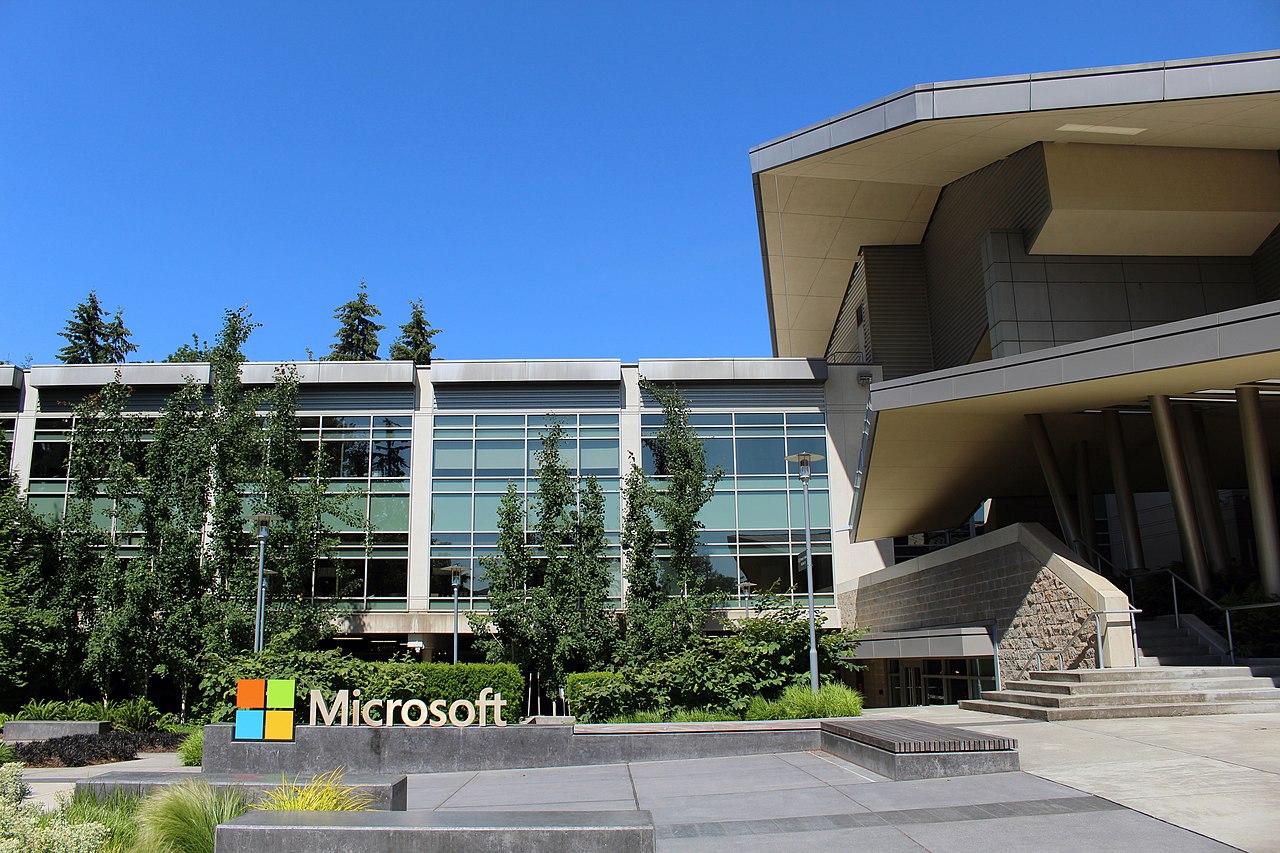
In January 1975, a college dropout and his childhood friend saw a photo of a tiny computer on a magazine cover and made a bet on the future. That bet became Microsoft — the company whose software would run the majority of the world's personal computers, reshape how people work, and eventually become one of the most valuable companies on Earth. This is the complete, verified timeline of Microsoft, told the way history deserves to be told.
Milestones
A magazine cover changes two young lives.
"Micro-Soft" is born in Albuquerque.
Microsoft relocates to Bellevue, Washington.
Microsoft supplies the operating system for the IBM PC.
The partnership becomes a corporation.
Microsoft launches Windows 1.0.
A new home and a landmark stock debut.
The productivity suite that conquered offices.
Windows finally breaks through.
A software launch becomes a cultural event.
Peak dominance draws government scrutiny.
Gates hands over the top job.
- January 1975The Altair 8800 Sparks an Idea
A magazine cover changes two young lives.
- 1975Microsoft Is Founded
"Micro-Soft" is born in Albuquerque.
- January 1, 1979Move to the Seattle Area
Microsoft relocates to Bellevue, Washington.
- 1980–1981The IBM Deal and MS-DOS
Microsoft supplies the operating system for the IBM PC.
- June 25, 1981Microsoft Incorporates
The partnership becomes a corporation.
- November 1985The First Windows
Microsoft launches Windows 1.0.
- February–March 1986Redmond Campus and the IPO
A new home and a landmark stock debut.
- August 1, 1989Microsoft Office Debuts
The productivity suite that conquered offices.
- May 22, 1990Windows 3.0
Windows finally breaks through.
- August 24, 1995Windows 95 Launch Mania
A software launch becomes a cultural event.
- 1998Windows 98 and Antitrust Storm Clouds
Peak dominance draws government scrutiny.
- January 13, 2000Steve Ballmer Becomes CEO
Gates hands over the top job.
Explore this story
Few companies have shaped modern life as deeply as Microsoft. When Bill Gates and Paul Allen founded it in 1975, personal computers barely existed. Within two decades, Microsoft's Windows operating system and Office productivity suite had become the invisible infrastructure of offices, schools, and homes across the planet.
The company's journey is not a straight line of triumph. It is a story of a fierce, competitive startup that outmaneuvered giants like IBM, dominated the PC era so completely that governments accused it of monopoly, stumbled badly in the age of mobile and the internet, and then — under a new kind of leader — reinvented itself around cloud computing and artificial intelligence.
This timeline traces Microsoft from a handwritten BASIC interpreter for the Altair 8800 to Windows 95 launch-night mania, from antitrust courtrooms to the $3 trillion club. Every date, name, and figure below has been cross-checked against authoritative sources, including Microsoft's own corporate records, Britannica, and major financial reporting.
- January 1975The Altair 8800 Sparks an Idea
A magazine cover changes two young lives.
The January 1975 issue of Popular Electronics featured the Altair 8800, an early personal computer. Bill Gates and Paul Allen saw it as a machine that desperately needed software. They contacted MITS, the Altair's maker in Albuquerque, offering a BASIC programming language interpreter.
This moment set in motion the founding of Microsoft and, arguably, the mass-market software industry.
Gates and Allen developed and demonstrated their BASIC before they had a company to sell it through.
- 1975Microsoft Is Founded
"Micro-Soft" is born in Albuquerque.
Gates and Allen formed their partnership in 1975 to market their BASIC interpreter. Allen coined the name "Micro-Soft," a blend of "microcomputer" and "software." Their first employee was high-school friend Ric Weiland.
The founding date the company itself recognizes as its birth.
In a July 29, 1975 letter, Gates used the name "Micro-Soft" — the earliest known written reference. The hyphen was later dropped.
- January 1, 1979Move to the Seattle Area
Microsoft relocates to Bellevue, Washington.
The company moved from Albuquerque to Bellevue, Washington — closer to Gates's and Allen's hometown of Seattle — as it grew beyond its startup roots.
Anchored Microsoft in the Pacific Northwest, which became a global technology hub.
The Seattle region remains Microsoft's home nearly half a century later.
- 1980–1981The IBM Deal and MS-DOS
Microsoft supplies the operating system for the IBM PC.
IBM approached Microsoft for an operating system for its upcoming personal computer. Microsoft provided MS-DOS (a 16-bit operating system). On August 12, 1981, IBM introduced its PC running MS-DOS 1.0. Crucially, Microsoft retained the right to license the software to other manufacturers.
This deal is widely seen as the foundation of Microsoft's dominance — licensing DOS to the entire clone market made it the industry standard.
The decision to keep licensing rights, rather than sell outright to IBM, became one of the most consequential business moves in tech history.
- June 25, 1981Microsoft Incorporates
The partnership becomes a corporation.
Microsoft formally incorporated in 1981, restructuring from a partnership into Microsoft Corporation.
A legal and organizational milestone as the company professionalized.
Incorporation came the same year the IBM PC launched with Microsoft software.
- November 1985The First Windows
Microsoft launches Windows 1.0.
Microsoft released the first version of Windows, a graphical operating environment that ran on top of MS-DOS, offering a mouse-driven interface with windows and menus.
Windows would become the world's dominant PC operating system, though early versions saw modest adoption.
It took several versions before Windows became a mainstream success.
- February–March 1986Redmond Campus and the IPO
A new home and a landmark stock debut.
On February 26, 1986, Microsoft moved to its corporate campus in Redmond, Washington. On March 13, 1986, Microsoft went public. The IPO priced shares at $21; by the end of the first trading day the stock stood around $28.
The IPO created enormous wealth — reportedly three billionaires and an estimated 12,000 millionaires among employees over time — and funded decades of growth.
The offering raised roughly $61 million and gave Microsoft a market capitalization of about $777 million.
- August 1, 1989Microsoft Office Debuts
The productivity suite that conquered offices.
Microsoft introduced its earliest version of the Office suite, bundling productivity applications such as Word and Excel.
Office became one of the most widely used software products in the world and a durable pillar of Microsoft's revenue.
Decades later, Office evolved into the subscription service Microsoft 365.
— The Bet (1975–1980)
Two friends who had bonded over computers as teenagers saw an opportunity most people missed: the personal computer would need software, and lots of it. They built a BASIC interpreter for the Altair 8800 and founded Micro-Soft to sell it. In these lean early years, Microsoft was a scrappy band of programmers writing languages for the earliest microcomputers.
— The Standard (1980–1995)
The IBM deal transformed everything. By supplying MS-DOS and keeping the right to license it widely, Microsoft became the default operating system for the exploding PC industry. Windows layered a graphical face on top, and with Windows 3.0 and then the phenomenon of Windows 95, Microsoft became the software heartbeat of the world's computers. Office locked in its grip on the workplace.
— The Giant Under Fire (1995–2014)
Dominance brought scrutiny. Antitrust regulators challenged Microsoft's power. The company launched Xbox and Windows XP, thrived in enterprise software, but was caught flat-footed by the rise of the internet, search, smartphones, and mobile operating systems, where rivals surged ahead.
— The Reinvention (2014–Present)
Satya Nadella refocused Microsoft on the cloud with Azure, embraced subscriptions with Microsoft 365, acquired LinkedIn and later Activision Blizzard, and made a defining bet on artificial intelligence through OpenAI. The result was one of the great corporate comebacks — culminating in a market value above $3 trillion.
- Microsoft began because of a magazine cover — the Altair 8800 on Popular Electronics.
- The name was originally hyphenated as "Micro-Soft."
- Paul Allen coined the company name.
- The founders were childhood friends before they were business partners.
- Microsoft's first product was a programming language interpreter, not an operating system.
- The company started in Albuquerque, far from today's Silicon Valley and Seattle hubs.
- Microsoft kept the licensing rights to MS-DOS — a decision that shaped tech history.
- Windows initially ran on top of MS-DOS rather than replacing it.
- The earliest known written use of "Micro-Soft" appears in a July 1975 letter from Gates to Allen.
- Microsoft's first employee, Ric Weiland, was a high-school friend of the founders.
- The company was based in Albuquerque because that's where MITS, the Altair's maker, was located.
- Microsoft moved to the Seattle area (Bellevue) in 1979 before settling in Redmond in 1986.
- The 1986 IPO was dubbed by many analysts as an "IPO of the year."
- Microsoft launched an early version of Office in 1989, before Windows had fully taken over.
- Steve Ballmer was among Microsoft's first business-side hires, years before becoming CEO.
- Windows 3.0 — not Windows 1.0 — was the version that truly popularized the platform.
Microsoft invented the personal computer
It provided software for early PCs like the Altair 8800; it did not invent the PC.
Microsoft created MS-DOS entirely from scratch overnight
It supplied MS-DOS to IBM and licensed it broadly; the story is more complex than a single invention.
Windows replaced MS-DOS immediately
Early Windows ran on top of MS-DOS.
Bill Gates is still Microsoft's CEO
He stepped down as CEO in 2000.
Microsoft always dominated every market
It fell behind rivals in search and mobile.
The company started in Silicon Valley
It started in Albuquerque, New Mexico.
Windows 1.0 was an instant blockbuster
Early Windows saw modest adoption; success came later.
Microsoft's comeback was luck
It reflected a deliberate strategy shift to cloud and AI under Nadella.
Office was always a subscription
It began as boxed software in 1989 and later became Microsoft 365.
Microsoft only makes software
It also makes hardware such as Surface and Xbox.
Note: Only quotations that can be responsibly attributed are included. Where exact wording cannot be verified, the idea is paraphrased rather than presented as a direct quote.
Microsoft has described its early mission in terms of putting a computer on every desk and in every home — a vision widely associated with the company's founding era.
Company records describe the founders' insight that the Altair 8800 was a machine "in need of software."
(Additional specific personal quotations have been omitted where their exact wording or attribution could not be verified against authoritative sources, in keeping with this project's accuracy-first standard.)
Microsoft's legacy is woven into the fabric of modern computing. It helped standardize the personal computer through MS-DOS and Windows, made productivity software universal through Office, and later became a leader in cloud computing and artificial intelligence. Its business model — licensing software broadly rather than tying it to a single machine — reshaped the entire technology industry. Whether admired for its innovation or criticized for its market power, Microsoft remains one of the most influential companies ever created.
Microsoft influenced how the world works, communicates, and plays. Its software became the default environment for offices and schools; its developer tools shaped generations of programmers; its cloud platform powers countless businesses; and its investments in AI are shaping the next era of technology. The company's competitive practices also influenced antitrust law and debates about technology monopolies worldwide.
- Did you know Microsoft began with a phone call to a computer maker in Albuquerque?
- Did you know the name was first spelled "Micro-Soft"?
- Did you know Microsoft's first product was a programming language, not Windows?
- Did you know the IBM licensing deal made MS-DOS the industry standard?
- Did you know Windows first ran on top of MS-DOS?
- Did you know Microsoft went public in 1986 at $21 a share?
- Did you know Windows 95's launch felt like a movie premiere?
- Did you know Office launched in 1989?
Microsoft vs. Apple: Apple built an integrated hardware-software ecosystem; Microsoft licensed software across many manufacturers, achieving broad standardization. Microsoft vs. Google: Google rose through internet search and advertising; Microsoft's roots are in packaged software and enterprise computing, though both now compete in cloud and AI. Microsoft vs. IBM: IBM was the hardware giant that gave Microsoft its break; Microsoft's software-licensing strategy ultimately eclipsed IBM's PC influence. Early Microsoft vs. Modern Microsoft: The early company sold programming languages and DOS; today's Microsoft is a cloud, AI, gaming, and productivity conglomerate.
Microsoft's impact on history is profound. By making software the defining product of the computer age, it helped democratize computing and put powerful tools into ordinary hands. Its dominance shaped competition law; its productivity software transformed the modern workplace; and its cloud and AI investments are shaping the technological future. The company stands as a central character in the story of how humanity became a digital civilization.
"Hard Drive: Bill Gates and the Making of the Microsoft Empire" by James Wallace and Jim Erickson.
"Idea Man" by Paul Allen (memoir).
"Showstopper!" by G. Pascal Zachary (on the making of Windows NT).
"Hit Refresh" by Satya Nadella (on Microsoft's transformation).
- Documentary features and series on the personal-computer revolution frequently cover Microsoft's rise.
- Profiles of Bill Gates have appeared in streaming documentary series exploring his life and work. (Additional specific documentary titles have been omitted where accurate details could not be verified.)
1975 founded → 1981 IBM PC with MS-DOS and incorporation → 1985 first Windows → 1986 IPO and Redmond move → 1989 Office → 1990 Windows 3.0 → 1995 Windows 95 → 1998 Windows 98 and antitrust → 2000 Ballmer becomes CEO → 2001 Xbox and Windows XP → 2011 Skype → 2012 Surface → 2014 Nadella becomes CEO → 2016 LinkedIn → 2019 OpenAI investment → 2024 $3 trillion market cap.
- The 1975 decision to write software for the Altair 8800.
- The 1980–1981 IBM deal and keeping MS-DOS licensing rights.
- The 1986 IPO.
- The breakthrough of Windows 3.0 in 1990.
- The cultural phenomenon of Windows 95.
- The late-1990s antitrust case.
- The 2000 CEO transition to Ballmer.
- The 2014 CEO transition to Nadella and the cloud pivot.
- The 2019 OpenAI investment and AI strategy.
- Crossing $3 trillion in market value in 2024.
Microsoft has faced significant controversy, most notably a major U.S. antitrust case around the late 1990s concerning its market dominance and the bundling of Internet Explorer. It also encountered antitrust scrutiny in the European Union in the 2000s. The company has periodically drawn criticism over competition practices and the pace of some product transitions. These disputes are presented here as documented business and legal history.
Microsoft and its leaders have received extensive recognition in business and technology. The company is consistently ranked among the world's most valuable and influential corporations. Its 1986 IPO was widely praised at the time. Its leaders, including Bill Gates and Satya Nadella, have been repeatedly recognized among the most influential figures in technology and business. (Specific individual awards are summarized generally where exact details could not be independently verified.)
Microsoft is one of the most recognized brands in the world. Windows and Office are used by vast numbers of people daily; Xbox has a large global gaming community; and Azure serves businesses worldwide. The company's brand is synonymous with personal and enterprise computing.
As of 2026, Microsoft sits at the center of the two defining technology trends of the era: cloud computing and artificial intelligence. Its Azure platform powers a huge share of global digital infrastructure, its productivity tools remain essential to work and education, and its AI investments shape how businesses and individuals use intelligent software. Understanding Microsoft's history helps explain how the modern digital world was built — and where it may be heading.
1. In what year was Microsoft founded?
2. Who co-founded Microsoft with Bill Gates?
3. What was Microsoft's first product?
- 1975: Microsoft founded by Gates and Allen.
- 1981: IBM PC ships with MS-DOS; Microsoft incorporates.
- 1986: IPO and move to Redmond.
- 1995: Windows 95 launch.
- 2001: Xbox and Windows XP.
- 2014: Satya Nadella becomes CEO.
- 2024: $3 trillion market cap.
SHORT SUMMARY: Microsoft, founded in 1975 by Bill Gates and Paul Allen, became the dominant force in personal-computer software through MS-DOS, Windows, and Office, and later reinvented itself as a cloud and AI leader worth over $3 trillion.
MEDIUM SUMMARY: Starting with a BASIC interpreter for the Altair 8800, Microsoft rose to power by supplying MS-DOS for the IBM PC and licensing it widely. Windows and Office made it ubiquitous. After a 1986 IPO and years of dominance — and a landmark antitrust battle — the company navigated leadership changes from Gates to Ballmer to Nadella. Under Nadella, Microsoft pivoted to cloud computing with Azure, acquired LinkedIn, invested heavily in OpenAI, and reached a market value above $3 trillion.
LONG SUMMARY: Microsoft's story spans the entire personal-computer era. Founded in 1975 in Albuquerque by childhood friends Bill Gates and Paul Allen, it began by writing programming languages for early microcomputers. The pivotal 1980–1981 deal to supply MS-DOS for the IBM PC — while retaining licensing rights — made Microsoft's software the industry standard. Windows, launched in 1985 and popularized by Windows 3.0 and the blockbuster Windows 95, defined desktop computing, while Office conquered the workplace. The 1986 IPO created immense wealth. At its peak, Microsoft's dominance triggered a major antitrust case. Leadership passed to Steve Ballmer in 2000, who expanded into gaming with Xbox and hardware with Surface but saw Microsoft trail in search and mobile. In 2014, Satya Nadella became CEO and led a historic turnaround centered on cloud computing (Azure), subscriptions (Microsoft 365), major acquisitions (LinkedIn, and later Activision Blizzard), and a defining bet on artificial intelligence via OpenAI. By January 2024, Microsoft surpassed a $3 trillion market capitalization, cementing its place among the most valuable and influential companies in history.
- 1.Microsoft — "Facts About Microsoft" and "Microsoft is born," official company newsroom (news.microsoft.com).
- 2.Microsoft — "The History of Microsoft" corporate history resources (learn.microsoft.com / news.microsoft.com/about).
- 3.Britannica — Microsoft Corporation and Satya Nadella biography entries.
- 4.Goldman Sachs — "1986 Microsoft IPO" firm history page (goldmansachs.com).
- 5.Fortune — reporting on Microsoft's $3 trillion market capitalization (2024).
- 6.CNBC — reporting on Satya Nadella's tenure and Activision Blizzard acquisition.
- 7.History.com — "Microsoft founded, April 4, 1975."
- 8.EBSCO Research Starters — Satya Nadella biography.
Related timelines

The story of how two friends in a California garage built the brand that put computers, music, and the internet into everyone's pocket.
From a suburban California garage to the most valuable company on Earth - the relentless visionary who reinvented computers, phones, music, and animation.

How two Stanford students in a rented garage built the company that became the front door to the internet.
"Big Blue" - the company that helped build the computing age.

The online bookstore that grew into a global commerce and cloud empire.

The research lab that brought artificial intelligence into everyday life.