Amazon.com, Inc.
The online bookstore that grew into a global commerce and cloud empire.
A company that started by shipping books out of a garage would go on to reshape how the world shops and how the internet itself runs.
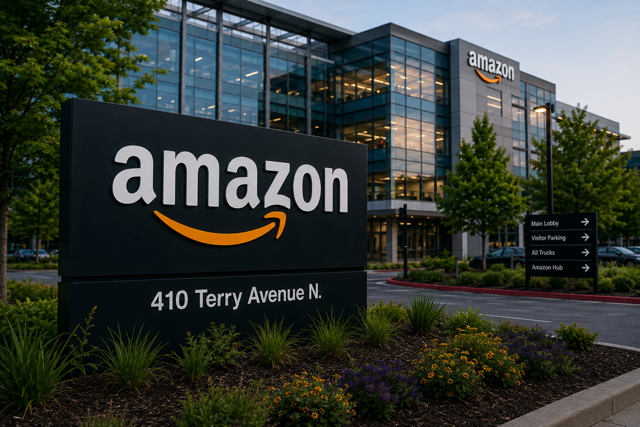
Amazon began in 1994 as an online bookstore founded by Jeff Bezos. Over three decades it expanded into an "everything store," pioneered cloud computing with Amazon Web Services, and became one of the most valuable and influential companies in the world.
Explore this story
It started with books. Just books.
When Amazon launched in the mid-1990s, it was a simple idea: sell books online and ship them anywhere. But behind that simple idea was a much larger ambition - to build a store that could eventually sell almost anything, and later, to power much of the internet itself.
This is the story of how a scrappy online bookseller became one of the most powerful companies on the planet.
- 1994Amazon is founded
Jeff Bezos founds Amazon in the Seattle area.
The company is created as an online bookstore.
Marks the birth of one of the internet's defining companies.
The company famously began as an online seller of books.
- 1995First sales
Amazon begins selling books to customers online.
Early growth was driven by the novelty and convenience of online ordering.
Demonstrated the potential of e-commerce.
Books were chosen partly because of the huge number of titles available.
- 1997Initial public offering
Amazon goes public on the stock market.
The company listed under the ticker AMZN.
Provided capital for rapid expansion.
It became one of the closely watched internet-era IPOs.
- Late 1990sExpanding beyond books
Amazon begins adding new product categories.
The company moved toward its vision of an "everything store."
Set Amazon on a path to broad retail dominance.
Music and electronics were among early expansions.
- 2005Amazon Prime launches
Amazon introduces its Prime membership program.
Prime offered faster shipping for a yearly fee.
Helped build strong customer loyalty.
Prime later expanded to include streaming and other benefits.
- 2006Amazon Web Services launches
Amazon launches AWS, its cloud-computing division.
AWS offered computing power and storage to other businesses.
Created a major new industry and a huge profit engine for Amazon.
AWS became foundational infrastructure for much of the internet.
- 2007Kindle launches
Amazon introduces the Kindle e-reader.
The device let users buy and read digital books.
Helped popularize e-books.
It reinforced Amazon's roots in the book business.
- 2014Alexa and Echo
Amazon introduces the Echo smart speaker and Alexa voice assistant.
The products brought voice computing into homes.
Expanded Amazon into consumer devices and voice technology.
Alexa became a widely recognized voice assistant.
- 2017Whole Foods acquisition
Amazon acquires the grocery chain Whole Foods Market.
The deal marked a major move into physical retail and groceries.
Signaled Amazon's ambitions beyond online-only retail.
It gave Amazon a large network of physical stores.
- 2021Leadership transition
Jeff Bezos steps down as CEO; Andy Jassy becomes CEO.
Jassy had previously led AWS.
Marked a generational shift in company leadership.
Bezos moved into an executive chairman role.
The Idea
In the mid-1990s, Jeff Bezos saw the rapid growth of the internet and decided to build an online store. He chose books as a starting point, in part because of the enormous number of titles that a physical store could never stock all at once.
The Everything Store
Amazon quickly expanded beyond books, adding category after category until it became known as a place to buy almost anything. Its focus on selection, convenience, and customer experience helped it grow rapidly.
Reinventing Infrastructure
One of Amazon's most important moves had nothing to do with retail. In 2006, it launched Amazon Web Services, renting out computing power and storage to other companies. AWS grew into a dominant force in cloud computing and a major source of Amazon's profits.
Devices and Ecosystem
With the Kindle, and later the Echo speaker and Alexa assistant, Amazon moved into consumer devices. These products deepened customers' ties to Amazon's services and expanded the company into new areas of daily life.
Into the Physical World
The 2017 acquisition of Whole Foods Market showed that Amazon's ambitions extended into physical stores and groceries, blending its online strengths with brick-and-mortar retail.
A New Era of Leadership
In 2021, founder Jeff Bezos stepped down as CEO, handing the role to Andy Jassy, who had built AWS. The transition marked a new chapter for one of the world's most influential companies.
- Amazon began as an online bookstore.
- It was founded by Jeff Bezos in 1994.
- It started in the Seattle, Washington area.
- It began selling to customers in 1995.
- It went public in 1997 under the ticker AMZN.
- It grew into an "everything store."
- Amazon Prime launched in 2005.
- AWS launched in 2006.
- Amazon was founded in 1994, before many rival internet firms.
- Its first products were books.
- It began selling to customers in 1995.
- Books were chosen partly for their huge catalog.
- AWS, not retail, became a key profit engine.
- Prime launched years before its streaming features.
- The Kindle tied Amazon back to its book roots.
- Alexa expanded Amazon into voice computing.
Amazon always sold everything.
It began as an online bookstore and expanded over time.
Amazon makes most of its profit from retail.
AWS, its cloud division, is a major profit source.
Amazon is only an online company.
It owns physical stores, including through Whole Foods.
Jeff Bezos still runs Amazon day-to-day as CEO.
He stepped down as CEO in 2021; Andy Jassy became CEO.
AWS is a small side project.
AWS is a leading global cloud platform.
Amazon was founded in the 2000s.
It was founded in 1994.
The Kindle was Amazon's first product.
Books sold online came first; the Kindle launched in 2007.
Prime always included streaming.
Prime started as a shipping program and later added streaming.
Amazon never entered groceries.
It acquired Whole Foods in 2017.
Amazon's influence is limited to shopping.
Through AWS, it also shapes internet infrastructure.
Note: To respect strict accuracy, verbatim quotations are omitted here because exact wording cannot be verified in this draft. Amazon and its founder are widely associated with themes of customer obsession, long-term thinking, and a willingness to experiment and accept failure.
Amazon's legacy is twofold: it transformed retail by making vast selection and fast delivery the norm, and it helped create the modern cloud-computing industry through AWS. Together, these changed both how people shop and how the internet is built.
Amazon influenced competitors, logistics networks, and customer expectations worldwide. AWS influenced how countless companies build and run their software. Its model inspired a generation of e-commerce and cloud businesses.
- Did you know Amazon began as an online bookstore?
- Did you know it was founded in 1994?
- Did you know Jeff Bezos founded it?
- Did you know it started in the Seattle area?
- Did you know it began selling to customers in 1995?
- Did you know it went public in 1997?
- Did you know its ticker is AMZN?
- Did you know Prime launched in 2005?
Compared with traditional retailers, Amazon competed on selection, convenience, and delivery speed rather than physical storefronts. Compared with other tech giants, it is distinctive for combining massive consumer retail with dominant cloud infrastructure through AWS - a rare mix of businesses under one company.
- Science
- AWS supports large-scale computing used in research.
- Technology
- AWS helped build the modern cloud-computing industry.
- Business
- Amazon reshaped retail and logistics worldwide.
- Politics
- Its scale has drawn regulatory and policy attention.
- Culture
- It changed shopping habits and expectations.
- Education
- Its rise is widely studied in business schools.
- Society
- It influenced employment, delivery, and consumer behavior.
- Environment
- The company has announced sustainability commitments.
- General histories of Amazon and e-commerce.
- Books on cloud computing and AWS.
- Works on the internet economy and modern business strategy.
- Documentary topics on the rise of Amazon.
- Features on e-commerce and the dot-com era.
- Programs on cloud computing and big tech.
Founded (1994); first sales (1995); IPO (1997); expanded beyond books; launched Prime (2005) and AWS (2006); introduced Kindle (2007) and Alexa/Echo (2014); acquired Whole Foods (2017); leadership passed from Bezos to Andy Jassy (2021).
- Founding as an online bookstore (1994).
- First customer sales (1995).
- Going public (1997).
- Expanding beyond books.
- Launching Prime (2005).
- Launching AWS (2006).
- Introducing the Kindle (2007).
- Introducing Alexa and Echo (2014).
- Acquiring Whole Foods (2017).
- Leadership transition to Andy Jassy (2021).
Amazon has faced public debate over issues such as market power, working conditions, and competition. This article notes these areas neutrally and omits disputed or unverified specifics.
Note: To avoid citing unverified specifics, this section notes general recognition. Amazon is frequently ranked among the world's most valuable and admired companies and among leading global brands.
Amazon is used by customers worldwide, with especially strong presence in North America and Europe, and AWS is used by businesses globally. Its brand is among the most recognized on Earth.
In 2026, Amazon remains central to both global retail and internet infrastructure. Its combination of e-commerce, cloud computing, devices, and media keeps it at the heart of the digital economy.
1. What did Amazon originally sell?
2. Who founded Amazon?
3. In what year was Amazon founded?
Did You Know: Amazon's cloud division, AWS, powers much of the internet. Imagine If: A small online bookstore becomes a global commerce and cloud empire - and it did. Historic Moment: 2006, when AWS launched and helped create the cloud industry. On This Day: 1994 - Amazon is founded as an online bookstore.
Short Summary: Amazon is a global e-commerce and cloud-computing company founded in 1994.
Medium Summary: Founded by Jeff Bezos as an online bookstore, Amazon grew into an "everything store," launched the AWS cloud platform, and expanded into devices, streaming, and physical retail, becoming one of the world's most valuable companies.
Long Summary: Amazon was founded in 1994 by Jeff Bezos as an online bookstore in the Seattle area, beginning customer sales in 1995 and going public in 1997. It expanded rapidly beyond books to become an "everything store," launched the Prime membership program in 2005, and introduced Amazon Web Services in 2006, helping create the modern cloud-computing industry. It moved into consumer devices with the Kindle (2007) and Alexa/Echo (2014), and into physical retail by acquiring Whole Foods (2017). In 2021, founder Jeff Bezos stepped down as CEO and Andy Jassy took over, leaving Amazon one of the most valuable and influential companies in the world.
People searching for Amazon usually want its founding story, its founder, the history of AWS and Prime, its major acquisitions, its leadership, and how it grew from books into a global giant.
- 1.Official Amazon corporate and investor-relations pages
- 2.Amazon annual reports (Form 10-K) and SEC filings
- 3.Encyclopaedia Britannica (company entry)
- 4.Reputable major news organizations for recent events
Related timelines

The story of relentless ambition — from an online bookstore started in a garage to one of the world's largest companies, and from e-commerce to private spaceflight.
From a two-person startup in Albuquerque to a multi-trillion-dollar cloud and AI powerhouse, this is the story of the company that taught the world to compute.

The company that helped make online payments possible for everyone.

The story of how two friends in a California garage built the brand that put computers, music, and the internet into everyone's pocket.
The electric-car maker that pushed the auto industry toward an electric future.
A pioneer of online auctions and marketplaces.
You may also like