ALBERT EINSTEIN
How a patent clerk in Bern reimagined space, time, light and gravity - and became the most famous scientist who ever lived.
In a single year, working nights at a Swiss patent office, an unknown 26-year-old quietly dismantled two centuries of physics and rebuilt reality from the ground up.
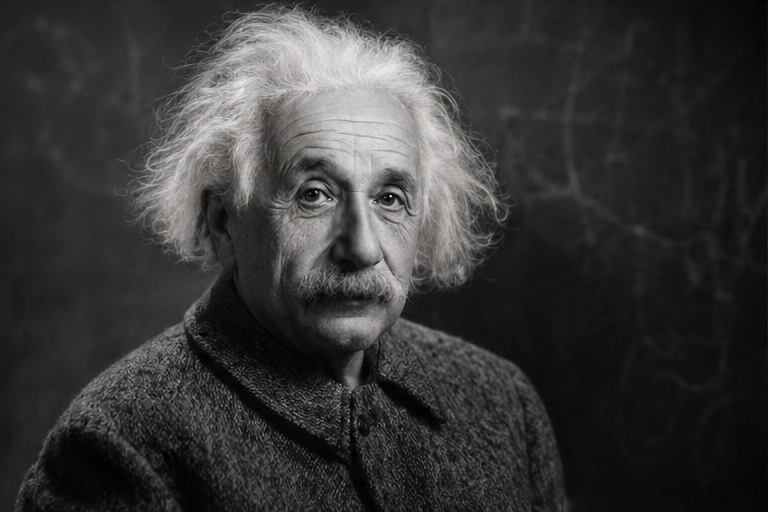
Albert Einstein (1879-1955) was a German-born theoretical physicist whose theories of special and general relativity transformed our understanding of space, time, mass, energy and gravity. His mass-energy equivalence formula, E = mc2, became the most famous equation in science. He received the 1921 Nobel Prize in Physics for his discovery of the law of the photoelectric effect, a cornerstone of quantum theory. A refugee from Nazi Germany, a reluctant catalyst of the atomic age, and a lifelong advocate for peace and human rights, Einstein ended the 20th century as Time magazine's "Person of the Century."
Explore this story
Most revolutions are loud. Einstein's began in silence.
There were no laboratories, no expensive equipment, no team of assistants. There was a young man with a low-ranking job examining patent applications in Bern, Switzerland, thinking in his spare time about light, motion and time itself. In 1905 - a year historians now simply call his "miraculous year" - he published four papers that would reshape physics forever.
What makes Einstein extraordinary is not just what he discovered, but how. He performed "thought experiments": he imagined chasing a beam of light, riding in a falling elevator, watching lightning strike a moving train. From pure imagination and mathematics, he predicted things no one had ever seen - light bending around the Sun, time slowing down at high speed, energy and mass being two faces of the same coin. And then, one by one, experiments proved him right.
But Einstein was never only a scientist. He was a refugee who fled Hitler's Germany, a moral voice who warned the world about the atomic bomb and then spent his final years campaigning against it, and a man offered the presidency of a nation who politely said no. This is the complete story of how one human mind changed how the universe is understood.
- 14 March 1879Einstein is born in Ulm
Albert Einstein is born into a middle-class Jewish family in Ulm, Germany.
Albert Einstein was born on 14 March 1879 in Ulm, in the Kingdom of Wurttemberg in the German Empire, to Hermann Einstein and Pauline Einstein. About six weeks later the family moved to Munich, where his father and uncle ran an electrical engineering business.
The birth of the person who would become the defining scientific mind of the 20th century.
According to accounts collected by the Institute for Advanced Study, his parents were concerned because he scarcely spoke until around age three.
- 1895-1896Leaving school and moving to Switzerland
A teenage Einstein leaves his Munich school and continues his education in Switzerland.
As a teenager Einstein left the Luitpold Gymnasium, frustrated by rote learning, and followed his family, who had moved their struggling business to Italy. He completed his secondary schooling in Aarau, Switzerland, and in 1896 entered the Swiss Federal Polytechnic in Zurich to train as a teacher of physics and mathematics.
Switzerland became the intellectual home where Einstein's scientific career took shape.
He graduated from high school in 1896 and later renounced his German citizenship as a teenager, becoming stateless for a period before acquiring Swiss citizenship.
- 1901Diploma and Swiss citizenship
Einstein earns his teaching diploma and becomes a Swiss citizen.
In 1901 Einstein obtained his diploma from the Swiss Federal Polytechnic and acquired Swiss citizenship. Unable to find a teaching post, he searched for work for two years.
This period of rejection preceded the most creative years of his life.
The future most famous scientist in history could not initially secure an academic job.
- 1902A daughter, Lieserl, and the Patent Office
Einstein and Mileva Maric have a daughter, and he begins work at the Swiss Patent Office.
In early 1902, before their marriage, Einstein and his fellow student Mileva Maric had a daughter named Lieserl. Her ultimate fate is unknown - historians believe she either died young, possibly of scarlet fever, or was given up for adoption. The same year, Einstein began working as a technical assistant at the Swiss Patent Office in Bern.
The Patent Office gave Einstein a stable income and time to think, setting the stage for his breakthroughs.
Almost nothing is documented about Lieserl after infancy; her existence only became widely known decades later through Einstein's private letters.
- 1903Marriage to Mileva Maric
Einstein marries Mileva Maric, a Serbian mathematician and his former classmate.
In 1903 Einstein married Mileva Maric, who had been the only woman among his fellow physics students at the Zurich Polytechnic. The couple would go on to have two sons.
Maric was Einstein's intellectual companion during his most productive early years.
Historians still debate whether and how much Maric contributed to Einstein's early work; the evidence remains disputed.
- 1904Birth of Hans Albert Einstein
Einstein's first son, Hans Albert, is born.
Hans Albert Einstein was born in 1904 in Bern. He later became a respected engineer and professor of hydraulic engineering.
The Einstein family grew during the very period of Albert's greatest scientific creativity.
Hans Albert eventually emigrated to the United States and taught at the University of California, Berkeley.
- 1905The Annus Mirabilis - the Miraculous Year
Einstein publishes four revolutionary papers and earns his doctorate.
In 1905, still working at the Patent Office, Einstein published four papers in the journal Annalen der Physik. They addressed the photoelectric effect (proposing that light comes in discrete packets of energy), Brownian motion (giving strong evidence for the existence of atoms and molecules), special relativity (redefining space and time), and mass-energy equivalence, expressed as E = mc2. He also obtained his doctorate from the University of Zurich the same year.
These four papers are considered a foundation of modern physics. Any one of them would have secured his place in history.
The mass-energy paper, "Does the Inertia of a Body Depend upon its Energy-Content?", was published on 21 November 1905.
- 1908-1912The rise through Europe's universities
Einstein moves from the Patent Office into a series of prestigious academic posts.
In 1908 Einstein became a Privatdozent (lecturer) in Bern. In 1909 he became Professor Extraordinary at Zurich, in 1911 Professor of Theoretical Physics in Prague, and in 1912 he returned to Zurich to a similar post.
Einstein transformed from an outsider into one of the most sought-after physicists in Europe.
His rapid ascent came after years of being unable to find any academic position at all.
A Quiet Child in Ulm and Munich
Albert Einstein was born on 14 March 1879 in Ulm, Germany, and grew up in Munich after his family relocated there weeks after his birth. His father Hermann and uncle ran an electrical business, and the young Albert was surrounded by the technology of the emerging electrical age. He was a thoughtful, sometimes solitary child, more captivated by a compass and later a geometry book than by the games of other children. The idea that invisible forces governed the world seems to have gripped him early.
The Rebel Student
Einstein struggled with the rigid, authoritarian style of German schooling. As a teenager he left his Munich gymnasium and eventually completed his education in Switzerland, entering the Swiss Federal Polytechnic in Zurich in 1896. He was brilliant but independent-minded, preferring to follow his own curiosity rather than the prescribed curriculum. He graduated in 1901 with a teaching diploma and became a Swiss citizen, but could not immediately find an academic job.
The Patent Clerk Who Changed Physics
Unable to secure a university post, Einstein took a position as a technical assistant at the Swiss Patent Office in Bern. Far from being a dead end, the steady job left his mind free. In 1905, his "miraculous year," he published four papers that transformed physics - on the photoelectric effect, Brownian motion, special relativity, and mass-energy equivalence - and earned his doctorate. He was just 26.
The Climb and the Masterpiece
Recognition followed quickly. Between 1908 and 1914, Einstein rose from lecturer in Bern to professor in Zurich, Prague, and finally Berlin. There, in 1915, he completed the general theory of relativity, reimagining gravity as the bending of space and time. It was arguably the most beautiful and ambitious theory in the history of physics.
Global Fame
When British astronomers confirmed during the 1919 solar eclipse that the Sun's gravity bends starlight, Einstein became world-famous almost instantly. Newspapers around the globe hailed the man who had overturned Newton's universe. In 1922 he received the 1921 Nobel Prize in Physics. He toured the world, met heads of state, and became a symbol of genius itself.
Exile
Einstein's fame could not protect him from the rise of Nazism. As a Jew and an outspoken pacifist, he was a target. In 1933 he renounced his German citizenship and emigrated to the United States, joining the Institute for Advanced Study in Princeton, which would be his home for the rest of his life.
The Reluctant Father of the Atomic Age
In 1939, fearing a Nazi atomic bomb, Einstein signed a letter urging President Roosevelt to pursue nuclear research. He took no part in the Manhattan Project itself, and after Hiroshima and Nagasaki he was horrified. He spent his final decade campaigning for peace, disarmament, and human rights, and famously called signing the letter the one great mistake of his life.
Final Years and Legacy
In 1952 Einstein declined the presidency of Israel. He continued to search, without success, for a "unified field theory" that would tie together all the forces of nature. He died on 18 April 1955. At the close of the century, Time magazine named him Person of the Century - a fitting title for the man who taught the world to think about the universe in an entirely new way.
- Einstein produced his four world-changing 1905 papers while employed full time as a patent clerk.
- His Nobel Prize was awarded for the photoelectric effect, not for relativity.
- He received the 1921 Nobel Prize a year late, in 1922, because the committee had reserved it.
- The 1919 eclipse observations made him one of the first globally famous scientists.
- He co-invented a refrigerator with no moving parts.
- Einstein and Leo Szilard held a U.S. patent for that refrigerator, granted in 1930.
- He was offered the presidency of Israel in 1952 and turned it down.
- He renounced his German citizenship twice in his life - once as a teenager and again in 1933.
- Before marrying Mileva Maric, the couple had a daughter, Lieserl, whose fate remains a historical mystery.
- Einstein was, for a time in his youth, stateless after renouncing German citizenship.
- His son Eduard was intellectually gifted but suffered serious mental illness.
- His son Hans Albert became a professor of hydraulic engineering in the United States.
- Einstein promised his Nobel Prize money to Mileva Maric as part of their divorce settlement.
- The refrigerator he co-designed was motivated partly by concern over dangerous refrigerant leaks.
- He worked closely with Leo Szilard, who also drafted the famous 1939 letter to Roosevelt.
- The 1939 letter was delivered to Roosevelt only in October, months after being signed in August.
Einstein failed math as a child.
He excelled at mathematics from an early age; this is one of the most persistent myths about him.
Einstein won the Nobel Prize for relativity.
He won it for his discovery of the law of the photoelectric effect.
Einstein built the atomic bomb.
He signed a 1939 warning letter but never worked on the Manhattan Project.
Einstein was a poor student overall.
He was a strong student in the sciences, though he clashed with rigid teaching methods.
Einstein invented the light bulb or worked as an inventor first.
He was a theoretical physicist; his most notable invention was a refrigerator co-designed with Leo Szilard.
Every inspirational quote online is genuinely Einstein's.
Many widely shared "Einstein quotes" are misattributed and have no verified source.
Einstein was a lone genius who worked entirely alone.
He collaborated with and debated many scientists, including Bohr, Born, Szilard, and Bose.
Einstein fully embraced quantum mechanics.
He helped found it but remained deeply skeptical of its probabilistic nature.
Einstein was offered and refused to lead many countries.
The documented offer was specifically the ceremonial presidency of Israel in 1952, which he declined.
Einstein's "biggest blunder" ruined his career.
The cosmological constant was one revised idea among many; his reputation only grew, and the concept later regained scientific relevance.
Note: Only quotes with reliable documentation are included here. Many popular "Einstein quotes" circulating online are misattributed and are deliberately excluded.
Quote 1: On quantum mechanics (letter to Max Born, December 1926): that he was convinced "He" does not play dice.
Meaning: Einstein believed the universe was governed by definite laws, not by pure chance, and resisted the randomness at the heart of quantum theory.
Quote 2: On the atomic bomb letter (to Linus Pauling, 1954): he described signing the 1939 letter to Roosevelt as "the one great mistake in my life."
Meaning: Late in life, Einstein deeply regretted his role in setting the nuclear age in motion.
Quote 3: On declining Israel's presidency (1952): "I am deeply moved by the offer from our State of Israel, and at once saddened and ashamed that I cannot accept it."
Meaning: He felt honored by the offer but believed he lacked the temperament and experience to lead people and manage official affairs.
Quote 4: On his own suitability for the presidency: he said he had "neither the natural ability nor the experience to deal with human beings."
Meaning: A striking admission of humility from one of history's greatest minds - brilliant with ideas, but doubtful of himself in politics.
Einstein's legacy is woven into the fabric of modern science. Special and general relativity remain foundational to physics, astronomy, and cosmology. His work on the photoelectric effect helped launch quantum theory, which underlies modern electronics and computing. His name has become a universal shorthand for genius, and his image is among the most recognized in the world. Beyond science, he is remembered as a humanitarian who used his fame to speak out for peace, civil rights, and nuclear disarmament.
Einstein influenced virtually every physicist who came after him. His debates with Niels Bohr shaped the philosophy of quantum mechanics. His 1935 work with Podolsky and Rosen anticipated questions at the heart of today's quantum information science. His prediction of gravitational waves guided experimental physics for a century until their detection. His warnings about nuclear weapons influenced the postwar disarmament movement, and his stature as a public intellectual set a template for the scientist as a moral voice in society.
- Did you know Einstein wrote his most famous papers while working at a patent office?
- Did you know his Nobel Prize was for the photoelectric effect, not relativity?
- Did you know he received the 1921 Nobel Prize in 1922?
- Did you know a 1919 solar eclipse made him world-famous?
- Did you know Einstein co-invented a refrigerator?
- Did you know he was offered the presidency of Israel?
- Did you know he declined that presidency, citing a lack of experience with people?
- Did you know Einstein predicted gravitational waves a century before they were detected?
Einstein vs Isaac Newton: Newton described gravity as a force acting at a distance; Einstein reinterpreted gravity as the curvature of spacetime, extending and, in some regimes, superseding Newton's picture.
Einstein vs Niels Bohr: Both were giants of modern physics, but they clashed over the meaning of quantum mechanics - Bohr embracing its probabilistic nature, Einstein resisting it.
Einstein vs Marie Curie: Both were Nobel laureates who reshaped physics; Curie's work centered on radioactivity and experiment, Einstein's on theory and the structure of space, time, and energy.
Einstein vs Nikola Tesla: Tesla was a visionary inventor of practical electrical technology; Einstein was a theoretician who transformed the conceptual foundations of physics.
- Science
- Redefined space, time, gravity, and energy; laid groundwork for quantum theory and modern cosmology.
- Technology
- His insights are essential to technologies from GPS (which must account for relativity) to the understanding of light and semiconductors rooted in quantum theory.
- Business
- His theories underpin entire high-technology industries built on quantum and electronic principles.
- Politics
- His 1939 letter influenced the launch of the U.S. atomic program, and his later activism shaped nuclear disarmament debates.
- Culture
- "Einstein" became a global synonym for genius, and his image is one of the most reproduced of the 20th century.
- Education
- His critique of rote learning and celebration of curiosity continue to influence discussions of how science should be taught.
- Society
- As a refugee and public intellectual, he modeled the scientist as an engaged moral citizen.
- Environment / Energy
- Mass-energy equivalence underlies the understanding of nuclear energy, with profound consequences for both power generation and weapons.
Einstein: His Life and Universe
by Walter Isaacson
Subtle is the Lord: The Science and the Life of Albert Einstein
by Abraham Pais
Relativity: The Special and the General Theory
by Albert Einstein
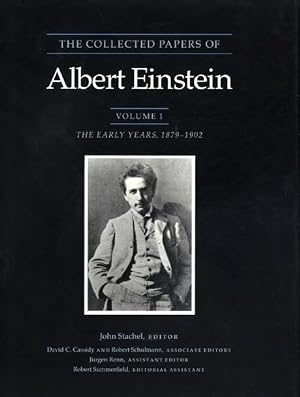
The Collected Papers of Albert Einstein
by Albert Einstein
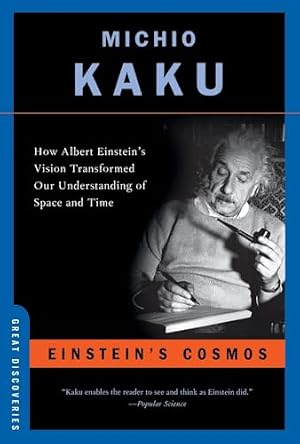
Einstein's Cosmos
by Michio Kaku
As an Amazon Associate, TimelineSphere earns from qualifying purchases.
- The life and science of Albert Einstein.
- The 1919 eclipse and the confirmation of general relativity.
- The Einstein-Szilard letter and the birth of the atomic age.
- The strange history of Einstein's brain.
- Einstein versus Bohr: the great quantum debate.
1879 born in Ulm; 1896 enters the Swiss Federal Polytechnic; 1901 diploma and Swiss citizenship; 1902 joins the Patent Office; 1903 marries Mileva Maric; 1905 the miraculous year and doctorate; 1908-1912 professorships in Bern, Zurich, and Prague; 1914 moves to Berlin; 1915 completes general relativity; 1917 introduces the cosmological constant; 1919 eclipse confirmation and marriage to Elsa; 1921/1922 Nobel Prize; 1926 co-invents the refrigerator; 1933 flees to Princeton; 1939 signs the letter to Roosevelt; 1940 becomes a U.S. citizen; 1945 retires; 1952 declines Israel's presidency; 1955 dies in Princeton; 1999 named Time Person of the Century.
- Entering the Swiss Federal Polytechnic in 1896.
- Taking the Patent Office job that gave him time to think.
- The 1905 miraculous year of four papers.
- Completing general relativity in 1915.
- The 1919 eclipse confirmation that made him famous.
- Winning the Nobel Prize (1921, received 1922).
- Fleeing Nazi Germany in 1933.
- Signing the 1939 letter to Roosevelt.
- The 1945 atomic bombings that turned him toward disarmament activism.
- Declining the presidency of Israel in 1952.
- The role of Mileva Maric: whether and how much his first wife contributed to his early work remains debated among historians, with the evidence considered inconclusive.
- The 1939 letter to Roosevelt: Einstein's part in prompting nuclear research remains a subject of moral debate, one he himself came to regret.
- The removal of his brain: pathologist Thomas Harvey took Einstein's brain during autopsy without prior permission, which raised lasting ethical questions.
- The "biggest blunder" story: historians continue to examine exactly how and when Einstein characterized the cosmological constant as a mistake.
- Nobel Prize in Physics for 1921 (awarded 1922), "for his services to Theoretical Physics, and especially for his discovery of the law of the photoelectric effect."
- Time magazine "Person of the Century," 1999.
- Einstein received numerous other scientific honors and honorary degrees over his lifetime; specific additional awards should be confirmed against authoritative archives before publication.
Einstein is popular worldwide, but especially so in the United States (his adopted home), Germany and Switzerland (linked to his early life and career), and Israel (through his strong identification with the Jewish people). His universal status as a symbol of genius makes him a globally recognized figure in science education, popular culture, and media.
Einstein's ideas remain essential today. General relativity governs modern cosmology and is built into technologies like satellite navigation. Quantum theory, which he helped start, drives the digital world and emerging quantum computing. His warnings about nuclear weapons remain relevant in an age of ongoing disarmament debates. And his example - a curious mind unafraid to question authority, paired with a strong moral conscience - continues to inspire scientists, students, and citizens.
1. In which year was Einstein born?
2. For what work did Einstein win the Nobel Prize?
3. What is Einstein's most famous equation?
Did You Know: Einstein published four physics-changing papers in a single year - 1905 - while working a day job at a patent office.
Imagine If: Imagine if Einstein had accepted the presidency of Israel in 1952 - one of history's greatest scientists leading a nation instead of a research institute.
Historic Moment: On 29 May 1919, astronomers watched starlight bend around the eclipsed Sun, and Einstein's universe replaced Newton's in the public mind.
On This Day: On 18 April 1955, Albert Einstein died in Princeton, closing one of the most influential lives in the history of science.
Albert Einstein (1879-1955) was a German-born theoretical physicist who created the theories of relativity, gave the world E = mc2, and won the 1921 Nobel Prize for the photoelectric effect.
Albert Einstein transformed physics in his 1905 "miraculous year" with four landmark papers, then completed general relativity in 1915, reimagining gravity as curved spacetime. Confirmed by the 1919 eclipse, his fame became global. A refugee from Nazi Germany, he settled in Princeton, signed a pivotal 1939 letter to Roosevelt about atomic weapons, and spent his later years advocating peace. He declined the presidency of Israel in 1952 and was named Time's Person of the Century in 1999.
Born in Ulm in 1879, Albert Einstein struggled with rigid schooling but excelled in science, graduating from the Swiss Federal Polytechnic and taking a patent-office job in Bern. In 1905 he published four revolutionary papers - on the photoelectric effect, Brownian motion, special relativity, and mass-energy equivalence - and earned his doctorate. Rising quickly through European universities, he completed the general theory of relativity in 1915, and the 1919 solar eclipse confirmed its prediction that gravity bends light, making him world-famous. He received the 1921 Nobel Prize (in 1922) for the photoelectric effect. As a Jewish pacifist, he fled Nazi Germany in 1933 for the Institute for Advanced Study in Princeton, becoming a U.S. citizen in 1940. In 1939 he signed the Einstein-Szilard letter urging atomic research, a decision he later called his one great mistake; he did not work on the bomb and became a leading voice for disarmament. He declined Israel's presidency in 1952 and died in Princeton in 1955. In 1999, Time magazine named him Person of the Century.
People searching "Albert Einstein" typically want: a clear biography and life timeline; an explanation of relativity and E = mc2 in simple terms; why he won the Nobel Prize; his role (or non-role) in the atomic bomb; personal details such as his family, citizenship, and death; famous and authentic quotes; and his lasting influence on science and the modern world.
- 1.NobelPrize.org - The Nobel Prize in Physics 1921 (summary and official biographical page for Albert Einstein).
- 2.Encyclopaedia Britannica - "Albert Einstein" biography and related articles (including his death and the offer of Israel's presidency).
- 3.Institute for Advanced Study (ias.edu) - "Albert Einstein: In Brief."
- 4.The Official Website of Albert Einstein (alberteinstein.com) - biography.
- 5.Library of Congress - Research guide on Einstein's 1905 "Annus Mirabilis" papers.
- 6.U.S. Department of Energy / OSTI OpenNet - "Einstein's Letter to President Roosevelt, 1939."
- 7.Franklin D. Roosevelt Presidential Library and Museum - the Einstein letter (primary document).
- 8.American Physical Society (APS News, "This Month in Physics History") - the cosmological constant and the Einstein-Szilard refrigerator patent.
Related timelines

A poor girl from occupied Poland who became the first person in history to win two Nobel Prizes - and paid for her discoveries with her life.
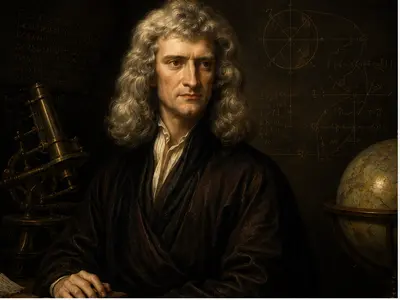
How a solitary genius uncovered the laws of motion and gravity, invented a new mathematics, and laid the foundations of modern science.
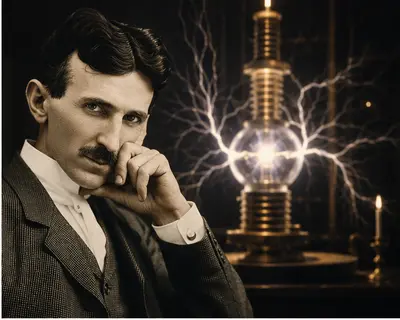
The brilliant, eccentric inventor whose alternating-current system lit up cities - and who dreamed of wireless power decades ahead of his time.
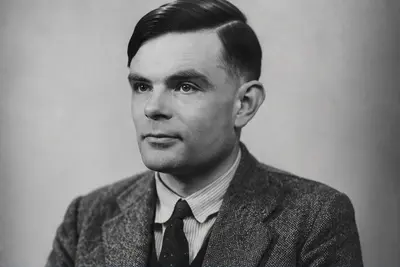
The mathematician who imagined the modern computer, cracked Nazi codes, and was persecuted for who he was - only to be honored decades too late.
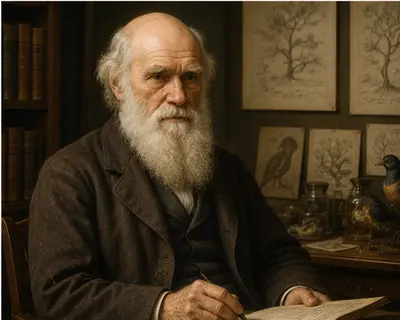
From a five-year journey around the world to the theory of evolution by natural selection, this is the life of the naturalist who transformed biology forever.

The company behind the world's most famous soft drink.