MARIE CURIE
A poor girl from occupied Poland who became the first person in history to win two Nobel Prizes - and paid for her discoveries with her life.
Working in a leaky shed with tons of raw ore, she isolated glowing new elements no one had ever seen - and in doing so, changed physics, chemistry, and medicine forever.
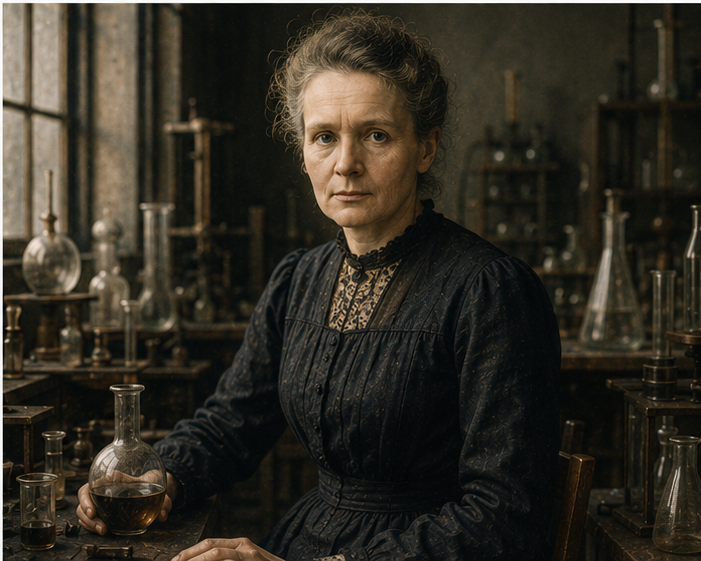
Marie Curie (1867-1934) was a Polish-born, naturalised-French physicist and chemist who pioneered the study of radioactivity - a word she coined. With her husband Pierre Curie, she discovered the elements polonium and radium. She won the Nobel Prize in Physics in 1903 and the Nobel Prize in Chemistry in 1911, becoming the first person to win two Nobel Prizes and the only person ever to win in two different sciences. She was also the first female professor at the Sorbonne.
Explore this story
Marie Curie's life reads like an improbable legend, except that every part of it is true.
Born in Warsaw under Russian rule, she grew up in a family that lost its savings and its loved ones to hardship and disease. Barred as a woman from higher education in Poland, she saved money for years and traveled to Paris to study - often cold, hungry, and alone in a tiny attic room. There she met a quiet physicist named Pierre Curie, and together they began a partnership of love and science.
What they discovered would reshape the modern world. Investigating strange rays coming from uranium, Marie found that the radiation was a property of atoms themselves. She and Pierre extracted two brand-new elements, polonium and radium, from mountains of ore in a makeshift laboratory. She named the phenomenon "radioactivity."
Her genius made her the first person to win two Nobel Prizes. Her generosity made her refuse to patent radium so that science and medicine could use it freely. And her devotion ultimately cost her life, as years of exposure to radiation destroyed her health. This is the complete story of Marie Curie.
- 7 November 1867Birth in Warsaw
Maria Skłodowska is born in Warsaw, then under Russian control.
Marie Curie was born Maria Salomea Skłodowska on 7 November 1867 in Warsaw. Both of her parents were teachers, and the family struggled financially under a repressive Tsarist regime that sought to suppress Polish culture.
Her early life under occupation and hardship shaped her determination and Polish patriotism.
When she was about 11, her mother died of tuberculosis and her eldest sister of typhus.
- c. 1885-1891Struggle for education
Barred from university in Poland, Maria works and saves to study abroad.
As a woman, Maria could not attend the official universities in Russian-controlled Poland. She worked as a governess and supported her sister's studies in Paris, on the understanding that her sister would later help her. She also studied secretly at the "Flying University," an underground Polish institution.
Her persistence in the face of exclusion became part of her legend.
She and her sister made a pact to fund each other's education in turn.
- 1891Arrival in Paris
Maria moves to Paris to study at the Sorbonne.
In 1891 Maria traveled to Paris and enrolled at the Sorbonne, adopting the French form of her name, Marie. She lived in poverty, focusing intensely on her studies in physics and mathematics.
Paris gave her the freedom and resources to pursue science at the highest level.
She reportedly lived in a cold attic and sometimes fainted from hunger while studying.
- 1895Marriage to Pierre Curie
Marie marries the physicist Pierre Curie.
In 1895 Marie married Pierre Curie, an established French physicist. Their marriage became one of the most famous scientific partnerships in history.
Together they would make discoveries that neither might have achieved alone.
Marie's meeting with Pierre changed her plans to return permanently to Poland.
- 1896-1898The birth of radioactivity research
Marie investigates the mysterious rays emitted by uranium.
Building on Henri Becquerel's discovery that uranium salts emit rays, Marie began measuring this activity. In 1898 she found that thorium behaved similarly and concluded that the radiation was an atomic property. She coined the term "radioactivity."
This insight - that radioactivity comes from within atoms - was a foundational step in modern physics.
The word "radioactivity" is based on the Latin word for ray.
- 1898Discovery of polonium and radium
The Curies identify two new elements.
In 1898 Marie and Pierre Curie announced the discovery of two new elements found in uranium ore: polonium, named after Marie's native Poland, and radium.
The discoveries opened an entirely new field of science and, eventually, medicine.
To prove radium existed, Marie processed tons of the mineral pitchblende to isolate tiny amounts.
- 1903The first Nobel Prize
Marie shares the Nobel Prize in Physics with Pierre and Becquerel.
In 1903 the Nobel Prize in Physics was awarded jointly to Henri Becquerel and to Pierre and Marie Curie for their work on radiation. Marie became the first woman to win a Nobel Prize.
The award brought radioactivity - and Marie Curie - to global attention.
The Curies also received the Davy Medal of the Royal Society the same year.
- 1906The death of Pierre Curie
Pierre Curie is killed in a street accident in Paris.
In 1906 Pierre Curie died after being struck by a horse-drawn vehicle on a Paris street. Marie was left to continue their work alone and to raise their two daughters.
The tragedy tested Marie profoundly, yet she pressed on with her research.
After Pierre's death, Marie took over his professorship, becoming the first female professor at the Sorbonne.
A Childhood Under Occupation
Maria Skłodowska was born in Warsaw in 1867, when Poland was under Russian control and Polish culture was suppressed. Her parents were teachers, but the family faced financial struggles and tragedy, including the early deaths of her mother and a sister. From childhood, Maria was a brilliant, disciplined student with a fierce love of learning.
The Long Road to Paris
Because women were barred from Polish universities, Maria worked as a governess and studied in secret while saving money. She and her sister agreed to fund each other's education in turn. In 1891 she finally reached Paris, enrolled at the Sorbonne, and endured years of poverty to earn her degrees in physics and mathematics.
A Partnership of Love and Science
In Paris she met Pierre Curie, and in 1895 they married. Turning her attention to the mysterious rays discovered by Becquerel, Marie made a crucial leap: radioactivity, she realized, came from inside atoms. Working together, the Curies discovered polonium and radium in 1898, extracting them from tons of ore in a poorly equipped shed.
Fame and Tragedy
The 1903 Nobel Prize in Physics made Marie the first woman to win the honor. But in 1906 Pierre was killed in a street accident. Grief-stricken, Marie took over his professorship at the Sorbonne, becoming its first female professor, and continued their research alone.
The Second Nobel and Service in War
In 1911 Marie won a second Nobel Prize, this time in Chemistry, becoming the first person to win two. During World War I she put science to practical use, developing mobile X-ray units to help wounded soldiers. She founded research institutes and mentored a new generation of scientists.
The Price of Discovery
Years of handling radioactive materials without protection ruined Marie's health. She died in 1934 of aplastic anemia linked to radiation. Her legacy endured through her institutes, through radiation medicine, and through her daughter Irène, who won her own Nobel Prize in 1935.
- She was the first person in history to win two Nobel Prizes.
- She is the only person to win Nobel Prizes in two different sciences.
- She was the first woman to win a Nobel Prize.
- She coined the word "radioactivity."
- She discovered two elements, polonium and radium.
- Polonium is named after her homeland, Poland.
- She was the first female professor at the Sorbonne.
- She processed tons of ore by hand to isolate tiny amounts of radium.
- She and her sister made a pact to fund each other's education in turn.
- She studied secretly because women were barred from Polish universities.
- Her mother died of tuberculosis when Marie was about 11.
- She adopted the French name "Marie" after moving to Paris.
- She reportedly fainted from hunger as a struggling student.
- She took over Pierre's Sorbonne chair after his death.
- She trained her daughter Irène to operate wartime X-ray equipment.
- She deliberately avoided profiting personally from radium.
Marie Curie discovered radioactivity.
Henri Becquerel first discovered the rays from uranium; Curie explained them as an atomic property and named "radioactivity."
Marie Curie worked entirely alone.
She collaborated closely with Pierre Curie and later with many others, including her daughter.
She was French.
She was born Polish and became a naturalised French citizen; she remained proudly Polish.
She got rich from radium.
She refused to patent the isolation process and did not profit personally from it.
Radiation dangers were well known in her time.
They were poorly understood, which is why she handled radioactive materials unprotected.
Both Nobel Prizes were shared.
The 1903 Physics Prize was shared; the 1911 Chemistry Prize was hers alone.
She was welcomed easily into science.
She faced repeated barriers as a woman and as a foreigner.
Her only contribution was theoretical.
She also advanced practical applications, especially in wartime radiography and medicine.
The curie unit is named only after Pierre.
The unit honors the Curies' collective contribution to radioactivity.
Her legacy ended with her death.
Her institutes, her scientific field, and her family's work carried her legacy forward.
Note: Only widely documented statements attributed to Marie Curie are summarized here; exact wording can vary in translation from French.
Quote 1: Curie is widely quoted as saying that nothing in life is to be feared, only understood, and that we should therefore understand more so we may fear less.
Meaning: Knowledge and understanding are the antidote to fear - a fitting motto for a scientist who studied the unknown.
Quote 2: She is often quoted expressing that she was among those who believe science has great beauty.
Meaning: For Curie, science was not merely useful; it was a source of wonder and aesthetic delight.
Quote 3: She emphasized perseverance, expressing that one must persevere and, above all, have confidence in oneself.
Meaning: Her own life of hardship and persistence embodied this belief in determination and self-belief.
Marie Curie's legacy is immense. Her discovery of radioactivity and new elements helped launch nuclear physics and transformed medicine through radiation therapy and diagnostic imaging. The research institutes she founded in Paris and Warsaw remain centers of cancer research. As the first woman to win a Nobel Prize and the first person to win two, she became - and remains - a global symbol of the possibilities open to women in science.
Curie influenced generations of physicists and chemists who built on her work in radioactivity, including her own daughter Irène. Her practical wartime radiography advanced medical imaging. Her example opened doors for women in universities and laboratories, and her refusal to patent radium set an ideal of science as a shared human endeavor.
- Did you know Marie Curie was the first person to win two Nobel Prizes?
- Did you know she is the only person to win in two different sciences?
- Did you know she was the first woman to win a Nobel Prize?
- Did you know she coined the word "radioactivity"?
- Did you know polonium is named after Poland?
- Did you know she refused to patent radium?
- Did you know her notebooks are still radioactive?
- Did you know she built mobile X-ray units in World War I?
Marie Curie vs Albert Einstein: Both reshaped early 20th-century physics; Curie's work was experimental and centered on radioactivity, Einstein's was theoretical and centered on relativity.
Marie Curie vs Pierre Curie: Partners in discovery; Marie made the key conceptual leap about atomic radiation and continued the work alone after Pierre's death.
Marie Curie vs Linus Pauling: Both won two Nobel Prizes; Curie won hers in two sciences (Physics and Chemistry), while Pauling won in Chemistry and Peace.
Marie Curie vs Rosalind Franklin: Both were pioneering women in science who faced barriers; Curie received global recognition in her lifetime, while Franklin's contributions were more fully acknowledged later.
- Science
- Founded the study of radioactivity and helped launch nuclear physics.
- Technology
- Enabled radiation-based technologies and instrumentation.
- Business / Industry
- Radium and radioactivity spawned new industries, some later recognized as hazardous.
- Politics
- Became a symbol of international scientific cooperation and, through her institutes, of national scientific pride in France and Poland.
- Culture
- Became an enduring icon of genius, perseverance, and women's achievement.
- Education
- Broke barriers for women in universities and inspired countless students.
- Society
- Advanced the role of women in professional science.
- Environment / Health
- Her work underpins both medical radiation therapy and modern awareness of radiation safety.
Madame Curie: A Biography
by Eve Curie
Obsessive Genius: The Inner World of Marie Curie
by Barbara Goldsmith
Marie Curie and Her Daughters
by Shelley Emling
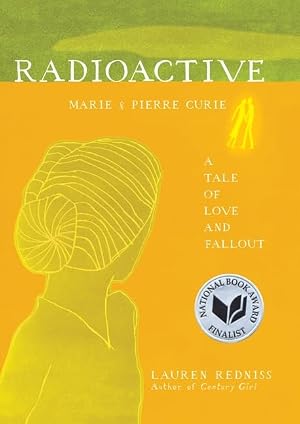
Radioactive: Marie & Pierre Curie
by Lauren Redniss
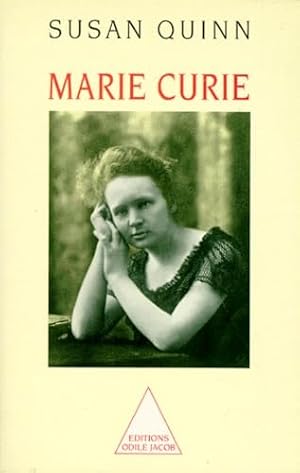
Marie Curie: A Life
by Susan Quinn
As an Amazon Associate, TimelineSphere earns from qualifying purchases.
- The life and science of Marie Curie.
- The discovery of radium and polonium.
- Marie Curie's wartime X-ray service.
- The Curie family's scientific dynasty.
- The history and dangers of radioactivity.
1867 born in Warsaw; c. 1885-1891 works and studies while barred from university; 1891 arrives in Paris; 1895 marries Pierre Curie; 1898 discovers polonium and radium and names radioactivity; 1903 shares the Nobel Prize in Physics; 1906 Pierre dies and Marie becomes the Sorbonne's first female professor; 1911 wins the Nobel Prize in Chemistry; 1914-1918 develops wartime X-ray units; 1921 receives a gram of radium in the U.S.; 1934 dies of aplastic anemia; 1935 her daughter Irène wins a Nobel Prize.
- Being barred from university in Poland.
- Moving to Paris in 1891.
- Marrying Pierre Curie in 1895.
- Realizing radioactivity is an atomic property.
- Discovering polonium and radium in 1898.
- Winning the 1903 Nobel Prize in Physics.
- Pierre's death in 1906.
- Becoming the Sorbonne's first female professor.
- Winning the 1911 Nobel Prize in Chemistry.
- Developing mobile X-ray units in World War I.
- Personal life scrutiny: around the time of her 1911 Nobel Prize, Curie faced intense and often sexist public attacks over her private life in the French press.
- Radiation safety: her handling of radioactive materials without protection is now seen as tragically unsafe, though the dangers were poorly understood at the time.
- Radium industry: the commercial radium boom her discoveries helped inspire later caused serious harm to workers, a consequence beyond her control.
- Nobel Prize in Physics, 1903 (shared with Pierre Curie and Henri Becquerel).
- Nobel Prize in Chemistry, 1911.
- Davy Medal of the Royal Society, 1903 (with Pierre Curie).
- Numerous honorary degrees and memberships in learned societies worldwide.
Marie Curie is revered worldwide, and especially in Poland (her homeland) and France (her adopted country). She is a central figure in the global history of science and a frequent symbol in discussions of women's achievement, appearing in classrooms, museums, and popular media around the world.
Curie's discoveries still shape modern life. Radiation therapy remains central to cancer treatment, medical imaging saves lives daily, and nuclear science underlies energy and research. Her story also endures as an inspiration for women in science and as a reminder of both the promise and the peril of powerful new discoveries.
1. In what year was Marie Curie born?
2. In which city was she born?
3. What word did Marie Curie coin?
Did You Know: Marie Curie's laboratory notebooks are still so radioactive they are kept in lead-lined boxes.
Imagine If: Imagine if Curie had patented radium - she could have become immensely rich, but she chose to give the discovery freely to science.
Historic Moment: In 1911 Marie Curie won her second Nobel Prize, becoming the first person in history to be honored twice.
On This Day: On 4 July 1934, Marie Curie died of illness caused by the very radiation she had discovered.
Marie Curie (1867-1934) was a Polish-French physicist and chemist who discovered polonium and radium, coined "radioactivity," and became the first person to win two Nobel Prizes.
Born in Warsaw under Russian rule, Marie Curie overcame poverty and discrimination to study in Paris, where she and her husband Pierre discovered polonium and radium and pioneered radioactivity. She won the Nobel Prize in Physics (1903) and Chemistry (1911), became the Sorbonne's first female professor, and served with mobile X-ray units in World War I. Years of radiation exposure led to her death in 1934.
Maria Skłodowska was born in Warsaw in 1867 and, barred from university as a woman in occupied Poland, studied secretly before moving to Paris in 1891. At the Sorbonne she excelled despite poverty, and in 1895 married Pierre Curie. Investigating the rays from uranium, she concluded that radioactivity is an atomic property and, with Pierre, discovered polonium and radium in 1898. The 1903 Nobel Prize in Physics made her the first woman laureate. After Pierre's death in 1906 she took his Sorbonne chair, becoming its first female professor, and in 1911 won the Nobel Prize in Chemistry, the first person to win two. During World War I she pioneered mobile radiography, and afterward built research institutes in Paris and Warsaw. She refused to patent radium. Decades of unprotected exposure to radiation caused the aplastic anemia that killed her in 1934. In 1935 her daughter Irène won a Nobel Prize, extending the family's remarkable legacy.
People searching "Marie Curie" typically want: a clear biography and timeline; what she discovered; how many Nobel Prizes she won and in what fields; how she died; her role in World War I; her status as a pioneering woman in science; and her lasting influence on physics and medicine.
- 1.NobelPrize.org - Marie Curie biographical page and "Women Who Changed Science: Marie Curie" (Nobel years, discoveries, the 1921 gram of radium).
- 2.Encyclopaedia Britannica - "Marie Curie" biography and "Marie Curie's Achievements" (two Nobel Prizes in two sciences).
- 3.Institut Curie (institut-curie.org) - the discovery of radioactivity, polonium, and radium, and her legacy.
- 4.American Institute of Physics (history.aip.org) - "Marie Curie: Research Breakthroughs" (thorium, coining "radioactivity").
- 5.U.S. National Library of Medicine / PMC - peer-reviewed article "Marie Curie (1867-1934): Twice Nobel Laureate" (biographical and medical legacy details).
Related timelines
How a patent clerk in Bern reimagined space, time, light and gravity - and became the most famous scientist who ever lived.
The brilliant, eccentric inventor whose alternating-current system lit up cities - and who dreamed of wireless power decades ahead of his time.
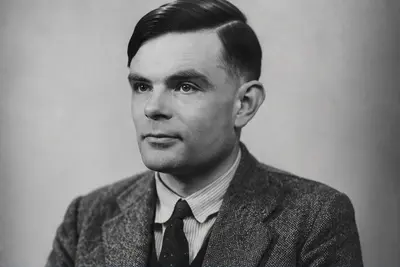
The mathematician who imagined the modern computer, cracked Nazi codes, and was persecuted for who he was - only to be honored decades too late.
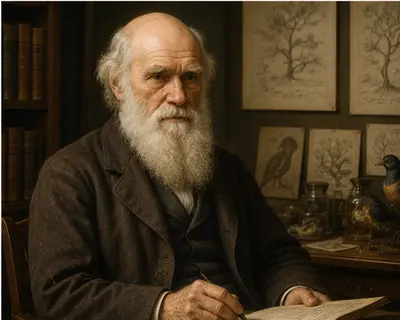
From a five-year journey around the world to the theory of evolution by natural selection, this is the life of the naturalist who transformed biology forever.
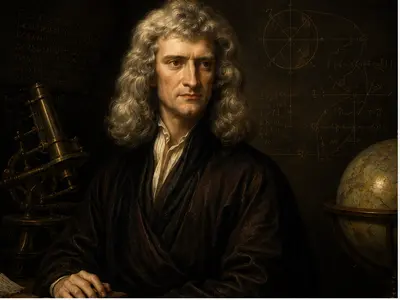
How a solitary genius uncovered the laws of motion and gravity, invented a new mathematics, and laid the foundations of modern science.

A prestigious global investment bank.