International Business Machines (IBM)
"Big Blue" - the company that helped build the computing age.
For more than a century, one company has stood near the center of the machines that count, calculate, and compute for the world.
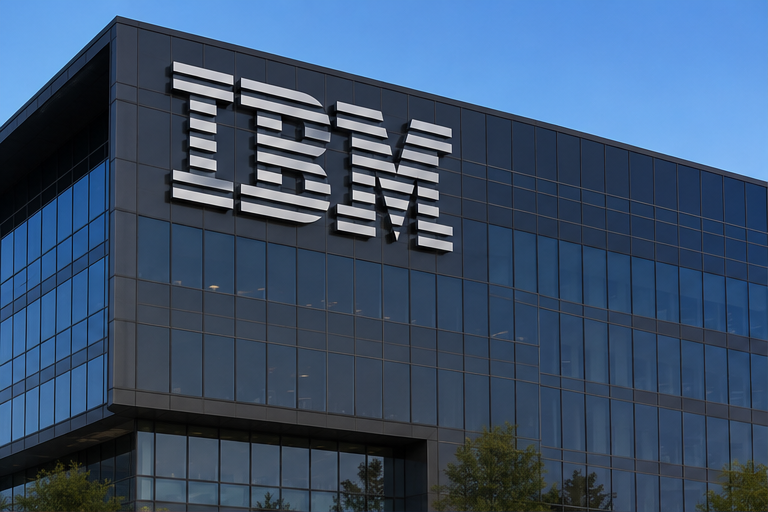
IBM traces its roots to 1911 and became one of the most important companies in the history of computing. Known as "Big Blue," it pioneered mainframe computers, helped launch the personal-computer standard, and later reinvented itself around software, services, and advanced research.
Explore this story
Before the smartphone, before the laptop, before the internet, there was a company already helping the world compute.
IBM's history stretches back more than a century, spanning tabulating machines, room-sized mainframes, the personal computer, and cutting-edge research. Few companies have remained relevant across so many eras of technology.
This is the story of "Big Blue" and its long journey through the computing age.
- 1911Corporate roots
A company that would become IBM is formed through a merger.
It combined firms making tabulating and business machines.
Laid the foundation for a computing giant.
IBM's origins predate modern electronic computers.
- 1924The IBM name
The company adopts the name International Business Machines.
The name reflected its growing, international ambitions.
Established the IBM identity.
Thomas J. Watson led the company in this era.
- Mid-20th centuryThe mainframe era
IBM becomes a leader in large mainframe computers.
Its machines handled major business and government computing.
Made IBM central to business computing.
Mainframes were often room-sized machines.
- 1964System/360
IBM introduces the System/360 family of mainframes.
It offered a compatible line of computers for many needs.
A landmark in computing history.
Compatible systems let customers upgrade more easily.
- 1981The IBM PC
IBM introduces its personal computer.
The IBM PC helped set a standard for personal computers.
Helped bring computing to businesses and homes.
The "PC" standard influenced the whole industry.
- 1990s-2000sShift to services and software
IBM reinvents itself around software, services, and consulting.
It moved away from relying mainly on hardware.
Kept IBM relevant in a changing industry.
The shift is a well-known corporate turnaround story.
- 2011Watson
IBM showcases its Watson artificial-intelligence system.
Watson demonstrated advanced question-answering abilities.
Highlighted IBM's research in AI.
Watson competed on a televised quiz show.
- 2010s-2020sFocus on enterprise technology
IBM focuses on cloud, AI, and enterprise technology.
It concentrated on serving large organizations.
Continued IBM's long evolution.
IBM remains known for its research laboratories.
Older Than the Computer
IBM's roots trace to 1911, when a merger combined firms making tabulating and business machines - long before modern electronic computers existed. In 1924 the company adopted the name International Business Machines, reflecting its growing international ambitions under leader Thomas J. Watson.
The Age of the Mainframe
Through the mid-20th century, IBM became a leader in large mainframe computers - often room-sized machines that handled major business and government computing. Its 1964 System/360 family, offering compatible computers for many needs, became a landmark in computing history.
A Computer for Everyone
In 1981, IBM introduced its personal computer. The IBM PC helped set a standard that influenced the entire industry, bringing computing to businesses and homes and shaping the personal-computer era.
Reinvention
As the industry changed in the 1990s and 2000s, IBM reinvented itself around software, services, and consulting rather than relying mainly on hardware. This shift became a well-known corporate turnaround story.
The Age of Watson
In 2011, IBM showcased Watson, an artificial-intelligence system that demonstrated advanced question-answering abilities, famously competing on a televised quiz show. It highlighted IBM's long tradition of research.
Enterprise Focus
In the 2010s and 2020s, IBM focused on cloud computing, artificial intelligence, and enterprise technology for large organizations - continuing an evolution that has kept "Big Blue" relevant across many technological eras.
- IBM's roots trace to 1911.
- It adopted the IBM name in 1924.
- It is nicknamed "Big Blue."
- Thomas J. Watson was an early leader.
- Its origins predate electronic computers.
- It became a mainframe leader.
- Mainframes were often room-sized.
- It introduced System/360 in 1964.
- IBM's roots trace to a 1911 merger.
- It made tabulating machines before computers.
- It adopted the IBM name in 1924.
- Thomas J. Watson shaped its early culture.
- It became a mainframe leader mid-century.
- System/360 (1964) was a major milestone.
- Compatible systems were a key innovation.
- The IBM PC launched in 1981.
IBM was founded in the computer age.
Its roots trace to 1911, before electronic computers.
IBM invented the personal computer entirely alone.
Its 1981 PC helped set a standard, building on a broader industry.
IBM only makes hardware.
It also focuses on software, services, and consulting.
"Big Blue" is a product.
It is a nickname for the company.
IBM never changed its business.
It reinvented itself multiple times.
Watson is a person.
Watson is IBM's artificial-intelligence system.
IBM is a small company.
It is a major, long-standing technology firm.
IBM had no role in research.
It is renowned for its research laboratories.
System/360 was a minor product.
It was a landmark in computing history.
IBM is no longer relevant.
It remains central to enterprise technology.
Note: To respect strict accuracy, verbatim quotations are omitted here because exact wording cannot be verified in this draft. IBM's culture is historically associated with themes of business machines, innovation, and long-term research.
IBM's legacy is its central, century-long role in the computing age. From tabulating machines to mainframes to the personal computer and advanced research, IBM helped build the foundations of modern information technology and repeatedly reinvented itself to stay relevant.
IBM influenced the entire computing industry - from the mainframes that ran businesses and governments to the PC standard that shaped personal computing. Its research laboratories advanced science, and its reinventions became case studies in business.
- Did you know IBM's roots trace to 1911?
- Did you know it adopted the IBM name in 1924?
- Did you know it is nicknamed "Big Blue"?
- Did you know Thomas J. Watson was an early leader?
- Did you know its origins predate computers?
- Did you know it led the mainframe era?
- Did you know System/360 launched in 1964?
- Did you know the IBM PC launched in 1981?
Compared with newer tech companies, IBM stands out for its longevity, spanning over a century and many technological eras. Compared with hardware-focused rivals, IBM increasingly emphasized software, services, and research, repeatedly reinventing its business.
- Science
- Its research advanced computing and physics; researchers won Nobel Prizes.
- Technology
- It pioneered mainframes and helped set the PC standard.
- Business
- It became central to business computing.
- Politics
- Its systems served governments and public institutions.
- Culture
- The IBM PC helped bring computing into daily life.
- Education
- Its technology and history are widely studied.
- Society
- It helped power the information age.
- Environment
- Large-scale computing raised energy considerations.
- General histories of IBM and computing.
- Books on the mainframe and PC eras.
- Works on corporate reinvention in technology.
- Documentary topics on the history of computing.
- Features on the personal-computer revolution.
- Programs on artificial intelligence and IBM Watson.
Corporate roots (1911); adopted IBM name (1924); mainframe leadership (mid-20th century); System/360 (1964); IBM PC (1981); shift to services and software (1990s-2000s); Watson AI (2011); focus on cloud, AI, and enterprise technology (2010s-2020s).
- Corporate roots in 1911.
- Adopting the IBM name (1924).
- Leading the mainframe era.
- Introducing System/360 (1964).
- Launching the IBM PC (1981).
- Setting the PC standard.
- Reinventing around services.
- Showcasing Watson (2011).
- Focusing on enterprise technology.
- Sustaining research leadership.
As a very long-lived global company, IBM has been the subject of historical and business debate over the decades. This article notes these areas neutrally and omits disputed or unverified specifics.
Note: To avoid citing unverified specifics, this section notes general recognition. IBM researchers have received major scientific honors, including Nobel Prizes, and the company is widely recognized in technology history.
IBM is recognized worldwide, especially in business and technology circles. Its products and research have influenced computing across the globe for over a century.
In 2026, IBM remains a major enterprise-technology company focused on cloud, AI, and research. Its long history and ongoing work keep it relevant to how large organizations use technology.
1. What does IBM stand for?
2. When do IBM's roots trace to?
3. What is IBM's nickname?
Did You Know: IBM is older than the electronic computer itself. Imagine If: A tabulating-machine company leads computing for a century - IBM did. Historic Moment: 1981, when the IBM PC launched. On This Day: 1924 - the International Business Machines name is adopted.
Short Summary: IBM, known as "Big Blue," is a century-old pioneer of mainframe and personal computing.
Medium Summary: With roots tracing to 1911 and the IBM name adopted in 1924, IBM led the mainframe era, introduced the landmark System/360 (1964) and the IBM PC (1981), then reinvented itself around software, services, and research, showcasing its Watson AI in 2011.
Long Summary: International Business Machines (IBM) traces its roots to a 1911 merger of firms making tabulating and business machines, adopting the IBM name in 1924 under leader Thomas J. Watson. Through the mid-20th century it became the leader in mainframe computing, and its 1964 System/360 family - offering compatible computers for many needs - became a landmark in computing history. In 1981 IBM introduced its personal computer, helping set a standard that shaped the entire industry. As technology changed, IBM reinvented itself around software, services, and consulting in the 1990s and 2000s, a widely studied turnaround, and in 2011 it showcased its Watson artificial-intelligence system. Today "Big Blue" focuses on cloud, AI, and enterprise technology, remaining one of the oldest and most influential companies in the history of computing.
People searching for IBM usually want its long history, what mainframes and the IBM PC were, its reinvention around services, and what Watson is.
- 1.Official IBM corporate and history (IBM Archives) pages
- 2.IBM annual reports (Form 10-K) and SEC filings
- 3.Encyclopaedia Britannica (company entry)
- 4.Computer History Museum materials
- 5.Reputable major news organizations for recent events
Related timelines
From a two-person startup in Albuquerque to a multi-trillion-dollar cloud and AI powerhouse, this is the story of the company that taught the world to compute.
The chipmaker whose processors powered the personal-computer age.

The database giant that helped run the world's businesses.

The story of how two friends in a California garage built the brand that put computers, music, and the internet into everyone's pocket.

The graphics-chip maker that became the engine of the AI revolution.

The platform that helped make music streaming mainstream.