Bill Gates — The Man Who Helped Put a Computer on Every Desk
The story of vision and reinvention — from co-founding Microsoft and leading the personal-computing revolution to giving away a vast fortune through global philanthropy.
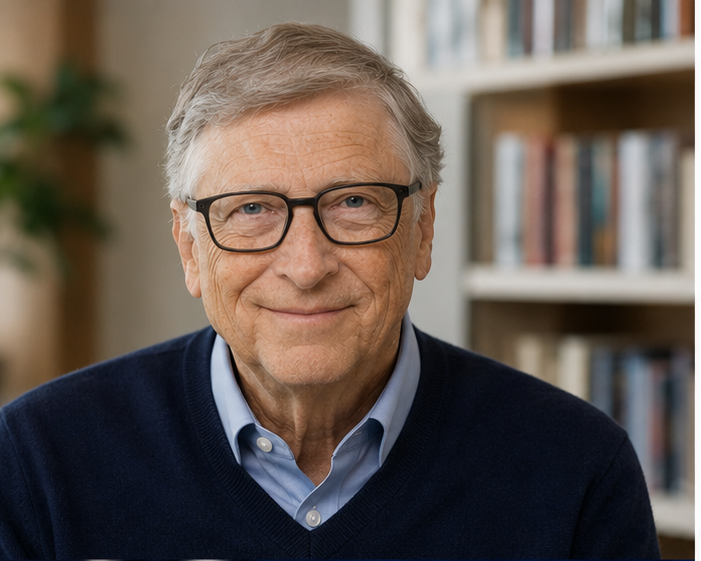
Bill Gates helped transform computing from a specialist tool into a part of everyday life. As co-founder of Microsoft, he became one of the most influential figures of the technology age, and later one of the world's leading philanthropists. This is the complete, verified timeline of Bill Gates.
Milestones
Bill Gates is born.
Gates develops his passion for computing.
Gates begins university.
Gates drops out to start Microsoft.
The company formalizes its structure.
A major transition year.
Gates focuses more on philanthropy.
Gates and Buffett launch a philanthropy campaign.
Gates changes his Microsoft role.
Gates leaves the board.
Gates dedicates himself to giving away his wealth.
- October 28, 1955Born in Seattle
Bill Gates is born.
- Late 1960sDiscovering Computers at Lakeside School
Gates develops his passion for computing.
- 1973Enrolls at Harvard
Gates begins university.
- 1975Co-Founds Microsoft
Gates drops out to start Microsoft.
- 1981Microsoft Is Incorporated
The company formalizes its structure.
- 2000Steps Down as CEO; Foundation Established
A major transition year.
- 2008Steps Back from Day-to-Day Microsoft Work
Gates focuses more on philanthropy.
- 2010The Giving Pledge
Gates and Buffett launch a philanthropy campaign.
- 2014Steps Down as Chairman
Gates changes his Microsoft role.
- 2020Resigns from Microsoft's Board
Gates leaves the board.
- 2021 onwardFull Focus on Philanthropy
Gates dedicates himself to giving away his wealth.
Explore this story
Bill Gates is an American technologist, entrepreneur, and philanthropist who co-founded Microsoft, the world's largest personal-computer software company. He is one of the central figures of the personal-computing revolution and, in his later career, one of the most significant philanthropists in modern history.
Born in Seattle in 1955, Gates developed an early passion for computers, befriending his future business partner Paul Allen at school. He dropped out of Harvard in 1975 to co-found Microsoft, which he led for decades as it became a dominant force in software.
In his second act, Gates turned his focus to philanthropy through the Bill & Melinda Gates Foundation, committing to give away the vast majority of his wealth to global health, development, and other causes.
This timeline traces his journey from a young programmer to a technology titan and global philanthropist, with major dates and facts cross-checked against authoritative sources. Some financial figures fluctuate over time.
- October 28, 1955Born in Seattle
Bill Gates is born.
William Henry Gates III was born on October 28, 1955, in Seattle, Washington, to attorney William H. Gates Sr. and Mary Gates.
The birth of a future pioneer of personal computing.
He grew up with two sisters in Seattle.
- Late 1960sDiscovering Computers at Lakeside School
Gates develops his passion for computing.
At the private Lakeside School, Gates encountered a computer terminal and became fascinated. There he befriended Paul Allen, and the two taught themselves programming.
The foundation of his computing career and key partnership.
He and Allen would later co-found Microsoft together.
- 1973Enrolls at Harvard
Gates begins university.
In 1973, Gates enrolled at Harvard University, where he took challenging courses including advanced mathematics and computer science.
A brief academic chapter before founding Microsoft.
He left Harvard before completing his degree.
- 1975Co-Founds Microsoft
Gates drops out to start Microsoft.
In 1975, Gates dropped out of Harvard and co-founded Microsoft with Paul Allen, aiming to capitalize on the emerging personal-computer revolution.
The founding of one of the most influential technology companies in history.
The company would grow into the world's largest PC software firm.
- 1981Microsoft Is Incorporated
The company formalizes its structure.
Microsoft was incorporated in 1981, with Gates as president and chairman of the board, as the company's software became central to the growing PC industry.
A key step in Microsoft's rise to dominance.
This era coincided with the spread of personal computers into homes and offices.
- 2000Steps Down as CEO; Foundation Established
A major transition year.
In 2000, Gates was succeeded as Microsoft CEO by Steve Ballmer and transitioned to chief software architect. That year, he and Melinda established the Bill & Melinda Gates Foundation.
Marked the beginning of his shift toward philanthropy.
The foundation became one of the world's largest charitable organizations.
- 2008Steps Back from Day-to-Day Microsoft Work
Gates focuses more on philanthropy.
Gates served as Microsoft's chief software architect until 2008, after which he increasingly devoted his time to the foundation's global work.
Deepened his commitment to philanthropy.
He remained connected to Microsoft in advisory and board roles for years afterward.
- 2010The Giving Pledge
Gates and Buffett launch a philanthropy campaign.
In 2010, Gates, Melinda French Gates, and Warren Buffett founded the Giving Pledge, encouraging the world's wealthiest people to commit the majority of their wealth to philanthropy.
A landmark initiative in modern philanthropy.
Many billionaires around the world have since signed the pledge.
— A Seattle Prodigy (1955–1972)
Born in Seattle in 1955, Gates discovered computers at the Lakeside School, where he befriended Paul Allen. The two taught themselves programming, sparking a lifelong passion for technology.
— Founding Microsoft (1973–1981)
Gates enrolled at Harvard in 1973 but dropped out in 1975 to co-found Microsoft with Allen. As personal computers spread, Microsoft's software became central to the industry, and the company was incorporated in 1981.
— Technology Titan (1981–2008)
Gates led Microsoft as it became the world's largest PC software company. He handed the CEO role to Steve Ballmer in 2000, became chief software architect, and co-established the Bill & Melinda Gates Foundation the same year.
— Global Philanthropist (2010–present)
Gates co-founded the Giving Pledge in 2010, stepped down as Microsoft chairman in 2014, and resigned from its board in 2020. He has since focused fully on philanthropy, pledging to give away nearly all his wealth.
- Bill Gates was born in Seattle in 1955.
- His father was an attorney and civic leader.
- He discovered computers at the Lakeside School.
- He befriended Paul Allen there.
- They taught themselves programming.
- He enrolled at Harvard in 1973.
- He dropped out in 1975 to co-found Microsoft.
- Microsoft became the world's largest PC software company.
- His full name is William Henry Gates III.
- His father, William H. Gates Sr., later helped lead the foundation.
- His mother, Mary Gates, was a schoolteacher and civic leader.
- He first encountered computing on a school terminal at Lakeside.
- He met Paul Allen, his future co-founder, at school.
- He enrolled at Harvard in 1973 before dropping out in 1975.
- Microsoft was incorporated in 1981.
- He served as chief software architect after stepping down as CEO in 2000.
Bill Gates invented the personal computer
He co-founded Microsoft, whose software helped drive the PC revolution.
He finished his Harvard degree
He dropped out in 1975 to start Microsoft.
He built Microsoft alone
He co-founded it with Paul Allen.
He is still Microsoft's CEO
He stepped down as CEO in 2000 and left the board in 2020.
He keeps all his wealth
He has pledged to give away nearly all of it.
His foundation is small
It is among the world's largest charitable organizations.
He only focuses on technology
His philanthropy targets global health, development, and climate.
The Giving Pledge was his idea alone
He co-founded it with Melinda French Gates and Warren Buffett.
He left Microsoft entirely in 2000
He remained as chief software architect and later adviser before leaving the board in 2020.
His philanthropy is symbolic
He has donated tens of billions of dollars.
Note: Only responsibly attributable ideas are included; exact verbatim quotations are omitted where wording could not be verified.
Gates is widely associated with ideas about the transformative power of technology and the responsibility of the wealthy to give back.
He has emphasized his commitment to giving away virtually all of his wealth during his lifetime, though exact wording varies across sources.
Bill Gates's legacy is twofold: he helped lead the personal-computing revolution that transformed modern life, and he became one of history's most significant philanthropists. Through Microsoft, he helped make computing accessible worldwide, and through his foundation, he has directed vast resources toward global health and development, setting a model for large-scale giving.
Gates's influence spans technology, business, and philanthropy. His work at Microsoft shaped the software industry and the spread of personal computers. His philanthropic model, including the Giving Pledge, has influenced how wealthy individuals approach charitable giving, and his foundation has had a major impact on global health initiatives.
- Did you know Bill Gates was born in Seattle in 1955?
- Did you know he discovered computing at the Lakeside School?
- Did you know he met Paul Allen at school?
- Did you know he enrolled at Harvard in 1973?
- Did you know he dropped out in 1975 to start Microsoft?
- Did you know Microsoft was incorporated in 1981?
- Did you know he was CEO for about 25 years?
- Did you know Steve Ballmer succeeded him as CEO in 2000?
Technologist vs. philanthropist: Gates first led the PC revolution, then became a leading global philanthropist. Microsoft vs. Gates Foundation: One transformed computing; the other targets global health and development. Early Gates vs. later Gates: The young programmer became a technology titan and then a full-time philanthropist. Gates vs. other tech founders: He is often cited alongside peers for pioneering personal computing and for large-scale giving.
Bill Gates's impact spans the digital and philanthropic worlds. By helping make computing accessible, he changed how people work, learn, and communicate. Through his foundation and the Giving Pledge, he has reshaped modern philanthropy and directed enormous resources toward global health and development challenges.
"The Road Ahead" by Bill Gates.
"How to Avoid a Climate Disaster" by Bill Gates.
"Source Code" by Bill Gates (his memoir).
"Hard Drive: Bill Gates and the Making of the Microsoft Empire" (biography).
- "Inside Bill's Brain: Decoding Bill Gates" (documentary series).
- Documentaries on Microsoft and the personal-computer revolution. (Specific additional titles omitted where accurate details could not be verified.)
1955 born in Seattle → late 1960s discovers computing at Lakeside; meets Paul Allen → 1973 enrolls at Harvard → 1975 drops out and co-founds Microsoft → 1981 Microsoft incorporated → 2000 steps down as CEO; establishes Gates Foundation → 2008 leaves chief-software-architect role → 2010 co-founds Giving Pledge → 2014 steps down as chairman → 2020 leaves board → 2021 onward full focus on philanthropy.
- Discovering computers at the Lakeside School.
- Befriending Paul Allen.
- Dropping out of Harvard in 1975.
- Co-founding Microsoft.
- Microsoft's incorporation in 1981.
- Stepping down as CEO in 2000.
- Establishing the Gates Foundation in 2000.
- Co-founding the Giving Pledge in 2010.
- Leaving Microsoft's board in 2020.
- Committing to give away nearly all his wealth.
As a major business and public figure, Gates and Microsoft have been the subject of significant scrutiny over the years, including well-known antitrust litigation involving Microsoft during his leadership, and later media attention on his personal life. This timeline focuses on his well-documented career and philanthropic milestones; where specific contested matters could not be neutrally and reliably verified here, they have been omitted rather than stated imprecisely.
Gates has received extensive recognition for his contributions to technology and philanthropy, including major honors for his charitable work and influence on global health. He and Melinda French Gates have been widely acknowledged for their foundation's impact. (Specific awards vary and are summarized generally where exact details could not be independently verified.)
Bill Gates is one of the most recognizable figures in technology and philanthropy worldwide. His views on global health, technology, and climate attract wide attention, and he remains a prominent voice on major global challenges.
As of 2026, Bill Gates remains a leading figure in global philanthropy, directing major resources toward health, development, and climate through his foundation. His career illustrates both the transformative power of technology and the potential of large-scale giving. Note that financial figures such as net worth and donation totals fluctuate over time.
1. In what year was Bill Gates born?
2. Where was he born?
3. What company did he co-found?
- 1955: Born in Seattle.
- 1975: Co-founds Microsoft with Paul Allen.
- 2000: Steps down as CEO; establishes the Gates Foundation.
- 2010: Co-founds the Giving Pledge.
- 2020: Resigns from Microsoft's board.
- 2021 onward: Full focus on philanthropy.
SHORT SUMMARY: Bill Gates (born 1955) co-founded Microsoft in 1975 with Paul Allen, led the personal-computing revolution, and became one of the world's leading philanthropists through the Bill & Melinda Gates Foundation.
MEDIUM SUMMARY: Born in Seattle in 1955, Gates discovered computing at the Lakeside School, where he met Paul Allen. He dropped out of Harvard in 1975 to co-found Microsoft, which became the world's largest PC software company and was incorporated in 1981. He served as CEO for about 25 years before handing the role to Steve Ballmer in 2000 and becoming chief software architect until 2008. That same year, 2000, he established the Gates Foundation. He co-founded the Giving Pledge in 2010, stepped down as chairman in 2014, and left the board in 2020, dedicating himself to philanthropy focused on global health, development, and climate.
LONG SUMMARY: William Henry Gates III, born October 28, 1955 in Seattle, Washington, is one of the central figures of the technology age and one of the most significant philanthropists in modern history. The son of attorney William H. Gates Sr. and civic leader Mary Gates, he developed a passion for computing at the private Lakeside School, where he befriended his future business partner Paul Allen. In 1973 he enrolled at Harvard University but dropped out in 1975 to co-found Microsoft with Allen, aiming to capitalize on the emerging personal-computer revolution. Microsoft was incorporated in 1981 and grew into the world's largest PC software company under his leadership. Gates served as CEO for about 25 years before being succeeded by Steve Ballmer in 2000, after which he became chief software architect until 2008. In 2000 he and Melinda established the Bill & Melinda Gates Foundation, and in 2010 he, Melinda, and Warren Buffett founded the Giving Pledge to encourage the wealthy to give away most of their fortunes. He stepped down as Microsoft's chairman in 2014 and resigned from its board in 2020. Following his 2021 divorce, he has focused fully on philanthropy — targeting global health, development, and climate — pledging to give away nearly all of his wealth, and stating that the foundation will eventually wind down. Note that financial figures such as net worth and donation totals fluctuate over time.
- 1.Britannica — Bill Gates biography (birth, education, Microsoft roles).
- 2.Bill & Melinda Gates Foundation — official biography and foundation history.
- 3.Forbes — profile and philanthropy reporting.
- 4.Academy of Achievement — biographical profile.
- 5.Reputable technology and business reporting on Microsoft and the Giving Pledge.
Related timelines
The chipmaker whose processors powered the personal-computer age.

The semiconductor challenger that reshaped the processor industry.

The engineer from Madurai who became CEO of Google and Alphabet.

The South Korean giant at the heart of the world's phones and chips.
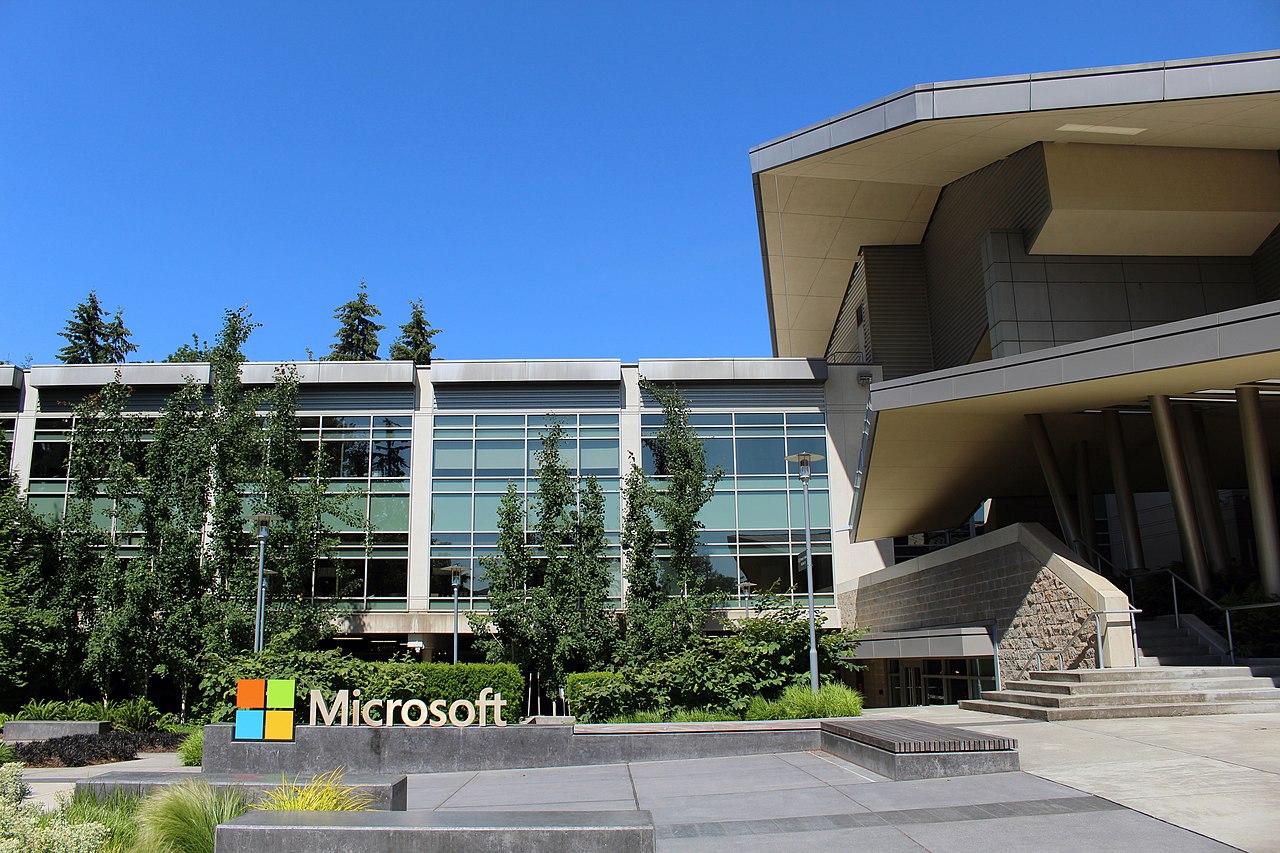
From a two-person startup in Albuquerque to a multi-trillion-dollar cloud and AI powerhouse, this is the story of the company that taught the world to compute.

The database giant that helped run the world's businesses.