Intel Corporation
The chipmaker whose processors powered the personal-computer age.
Inside most of the world's personal computers for decades sat a small silicon chip from a company that helped define Silicon Valley itself.
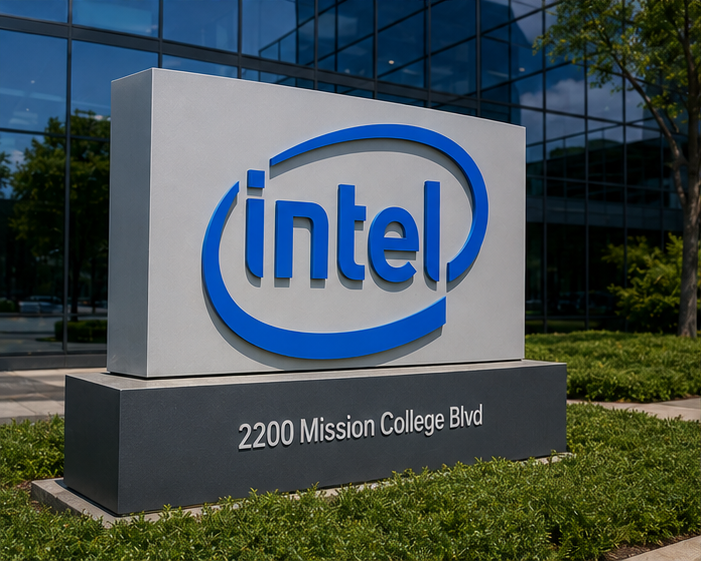
Intel, founded in 1968, became one of the most important semiconductor companies in history. It produced the microprocessors that powered the personal-computer revolution, popularized the "Intel Inside" brand, and helped make Silicon Valley the center of the technology world.
Explore this story
The device you are reading this on likely owes its existence to a tiny slice of silicon - and for decades, that slice often came from Intel.
Founded by semiconductor pioneers, Intel helped invent the microprocessor and then rode the personal-computer boom to become one of the most influential technology companies in the world. Its chips became the beating heart of countless machines.
This is the story of the company that helped put a computer on every desk.
- 1968Intel is founded
Robert Noyce and Gordon Moore found Intel in California.
The founders were pioneers in semiconductor technology.
Began one of the most important chip companies in history.
The name comes from "integrated electronics."
- 1971Early microprocessor
Intel introduces an early commercial microprocessor.
It placed computing functions onto a single chip.
Helped launch the microprocessor era.
Microprocessors made small, affordable computers possible.
- 1970sGrowth of the chip business
Intel expands its semiconductor and processor business.
It became a leading maker of memory and processors.
Established Intel as a semiconductor leader.
Intel later focused heavily on microprocessors.
- 1980sThe x86 architecture
Intel's x86 processors become central to personal computers.
The architecture became an industry standard for PCs.
Tied Intel's chips to the PC revolution.
x86 remained influential for decades.
- 1991"Intel Inside"
Intel launches the "Intel Inside" marketing campaign.
It made a component brand famous with everyday consumers.
Turned a chip into a recognized consumer brand.
Few component makers achieve such brand recognition.
- 1993Pentium
Intel introduces the Pentium brand of processors.
Pentium chips powered many PCs through the 1990s and 2000s.
Became a household name in computing.
The Pentium name became widely recognized.
- 2000s-2010sThe Core era
Intel introduces its Core line of processors.
Core processors powered a wide range of computers.
Maintained Intel's central role in computing.
Core processors became standard in many laptops and desktops.
- 2010s-2020sA competitive era
Intel faces intense competition in the semiconductor industry.
Rivals and new manufacturing challenges reshaped the market.
Reflected the fast-changing chip industry.
Chipmaking became a major focus of global economic policy.
Pioneers of Silicon
Intel was founded in 1968 by Robert Noyce and Gordon Moore, two pioneers of semiconductor technology. Noyce was a co-inventor of the integrated circuit, and Moore became known for an observation about the rapid growth of chip capability now called Moore's Law.
The Microprocessor Era
In 1971 Intel introduced an early commercial microprocessor, placing computing functions onto a single chip. This breakthrough made small, affordable computers possible and helped launch a new era in technology.
Powering the PC
During the 1980s, Intel's x86 processor architecture became central to personal computers, tying the company's fortunes to the booming PC industry. The architecture became a lasting industry standard.
A Chip Becomes a Brand
In 1991 Intel launched the "Intel Inside" campaign, a rare feat of making an internal component into a household brand. Then in 1993 the Pentium name arrived, becoming widely recognized among consumers.
The Core Years
In the 2000s and 2010s, Intel's Core processors powered a broad range of laptops, desktops, and servers, keeping the company at the center of everyday computing.
A Changing Industry
More recently, Intel has navigated intense competition and rapid changes in chip manufacturing. Semiconductors became a focus of global economic and policy attention, underscoring the industry's importance.
- Intel was founded in 1968.
- It was co-founded by Robert Noyce and Gordon Moore.
- Noyce co-invented the integrated circuit.
- Moore is known for Moore's Law.
- The name means "integrated electronics."
- It introduced an early microprocessor in 1971.
- Microprocessors enabled affordable computers.
- Its x86 architecture became a PC standard.
- Intel was founded in 1968.
- Its name comes from "integrated electronics."
- Robert Noyce co-invented the integrated circuit.
- Gordon Moore gave his name to Moore's Law.
- Intel first made memory chips as well as processors.
- It introduced an early microprocessor in 1971.
- The x86 architecture became a lasting standard.
- "Intel Inside" launched in 1991.
Intel makes complete computers.
Intel mainly makes processors and chips, not whole computers.
Moore's Law is a law of physics.
It is an observation about the growth of chip capability.
Intel was founded in the 1980s.
It was founded in 1968.
"Intel Inside" was a product name.
It was a marketing campaign, launched in 1991.
Intel invented the personal computer.
It made processors that powered PCs, but did not invent the PC.
Only Intel makes processors.
Intel has competitors in the processor market.
x86 was a short-lived design.
The x86 architecture remained influential for decades.
Pentium and Core are unrelated companies.
Both are Intel processor brands.
Intel had no notable founders.
Its founders were semiconductor pioneers Noyce and Moore.
Chipmaking is simple.
Semiconductor manufacturing is highly complex and costly.
Note: To respect strict accuracy, verbatim quotations are omitted here because exact wording cannot be verified in this draft. Intel's history is closely associated with Gordon Moore's observation about the rapid growth of computing power (Moore's Law).
Intel's legacy is central to the computing age. By helping pioneer the microprocessor and powering the personal-computer revolution with its x86 chips, Intel became one of the defining companies of Silicon Valley and modern technology.
Intel influenced the entire computing industry, from PC makers that relied on its processors to the broader semiconductor sector. Moore's Law shaped expectations for technological progress, and Intel's branding influenced how components are marketed.
- Did you know Intel was founded in 1968?
- Did you know its name means "integrated electronics"?
- Did you know Robert Noyce co-invented the integrated circuit?
- Did you know Gordon Moore gave his name to Moore's Law?
- Did you know Intel introduced an early microprocessor in 1971?
- Did you know its x86 architecture became a PC standard?
- Did you know "Intel Inside" launched in 1991?
- Did you know Pentium arrived in 1993?
Compared with its rival AMD, Intel was long the dominant maker of PC processors, especially through the x86 architecture. Compared with newer chip leaders focused on graphics and AI, Intel's historic strength lay in the central processors that powered mainstream computing.
- Science
- Its chips enabled advances in computing-driven research.
- Technology
- It helped launch the microprocessor and PC eras.
- Business
- It became a semiconductor and economic powerhouse.
- Politics
- Semiconductors became a focus of global economic policy.
- Culture
- "Intel Inside" became a widely recognized brand.
- Education
- Its technology is central to computer-science study.
- Society
- It helped bring computers into homes and offices.
- Environment
- Chip manufacturing raised energy and resource considerations.
- General histories of Intel and the semiconductor industry.
- Books on Silicon Valley and the microprocessor.
- Works on the history of computing.
- Documentary topics on the history of the microprocessor.
- Features on Silicon Valley's rise.
- Programs on the semiconductor industry.
Founded (1968); introduced an early microprocessor (1971); grew its chip business (1970s); x86 became central to PCs (1980s); launched "Intel Inside" (1991) and Pentium (1993); Core era (2000s-2010s); navigated intense competition (2010s-2020s).
- Founding in 1968.
- Introducing an early microprocessor (1971).
- The rise of the x86 architecture.
- Powering the PC revolution.
- Launching "Intel Inside" (1991).
- Introducing Pentium (1993).
- The Core processor era.
- Becoming a Silicon Valley cornerstone.
- Facing intense modern competition.
- Semiconductors becoming a global priority.
Intel has faced public debate over topics such as market competition, manufacturing challenges, and industry practices. This article notes these areas neutrally and omits disputed or unverified specifics.
Note: To avoid citing unverified specifics, this section notes general recognition. Intel and its founders are widely honored in technology and business, and its role in computing history is broadly recognized.
Intel is recognized worldwide, with its "Intel Inside" branding known far beyond the technology sector. Its processors have been used in computers around the globe.
In 2026, Intel remains a major force in the semiconductor industry, an industry now seen as strategically vital worldwide. Its history and ongoing work continue to influence the direction of computing.
1. When was Intel founded?
2. Who co-founded Intel?
3. What does "Intel" come from?
Did You Know: "Intel Inside" turned a hidden chip into a household brand. Imagine If: A single chip could hold a computer's brain - the microprocessor did. Historic Moment: 1971, the era of Intel's early microprocessor. On This Day: 1968 - Intel is founded in California.
Short Summary: Intel is the semiconductor company whose processors powered the personal-computer age.
Medium Summary: Founded in 1968 by Robert Noyce and Gordon Moore, Intel helped pioneer the microprocessor and made the x86 processors that powered the PC revolution, becoming a cornerstone of Silicon Valley through brands like Pentium and Core.
Long Summary: Intel was founded in 1968 by semiconductor pioneers Robert Noyce, a co-inventor of the integrated circuit, and Gordon Moore, whose name is attached to Moore's Law. In 1971 Intel introduced an early commercial microprocessor, helping launch a new computing era. Through the 1980s its x86 architecture became central to personal computers, and campaigns like "Intel Inside" (1991) plus brands like Pentium (1993) and later Core made Intel a household name. A cornerstone of Silicon Valley, Intel powered decades of computing advances and, in recent years, has navigated intense competition and manufacturing challenges in a semiconductor industry now seen as strategically vital worldwide.
People searching for Intel usually want its founding story, its founders, what the microprocessor and x86 are, Moore's Law, and its role in the PC revolution.
- 1.Official Intel corporate and history pages
- 2.Intel annual reports (Form 10-K) and SEC filings
- 3.Encyclopaedia Britannica (company/technology entries)
- 4.Computer History Museum materials
- 5.Reputable major news organizations for recent events
Related timelines

The semiconductor challenger that reshaped the processor industry.
From a two-person startup in Albuquerque to a multi-trillion-dollar cloud and AI powerhouse, this is the story of the company that taught the world to compute.

The graphics-chip maker that became the engine of the AI revolution.
"Big Blue" - the company that helped build the computing age.

The story of how two friends in a California garage built the brand that put computers, music, and the internet into everyone's pocket.

The engineer from Madurai who became CEO of Google and Alphabet.