The Dial-Up Modem
The device whose screeching sound connected homes to the early internet.
The dial-up modem was a device that connected a computer to the internet over a standard telephone line, famous for the screeching, hissing sound it made while connecting.
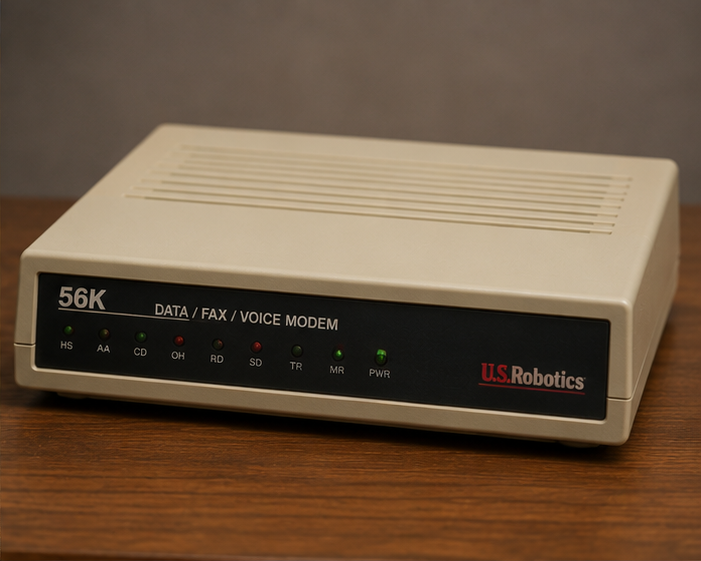
The dial-up modem was a device that let computers connect to the internet over ordinary telephone lines. Popular in the 1990s and early 2000s, it was many people's first gateway to the online world and is remembered for the distinctive screeching, hissing sound it produced while establishing a connection. As faster broadband connections such as DSL, cable, and fiber spread, dial-up declined and largely faded from everyday use.
Explore this story
The dial-up modem is a landmark example of a technology that brought the internet into homes and then gave way to faster connections. It was a device that connected a computer to the internet over a standard telephone line.
Many people's first gateway to the online world, the dial-up modem is remembered for the distinctive screeching sound it made while connecting. As faster broadband connections spread, dial-up declined and largely faded from everyday use.
This is the story of the device whose screeching sound connected homes to the early internet.
- Early 1980sModems reach home computers
Dial-up modems come into home use.
Dial-up modems came into use for connecting home computers over phone lines.
Allowed computers to communicate over telephone networks.
They used the existing telephone system.
- 1990sThe internet enters homes
Dial-up brings the internet to households.
Dial-up modems became many people's first way to access the internet.
Opened the online world to households.
The connection made a distinctive screeching sound.
- 1990sThe screeching sound
The connection sound becomes iconic.
The modem produced a famous screeching, hissing sound while connecting.
Became an iconic sound of the early internet.
Using the internet often tied up the phone line.
- Late 1990s-2000sBroadband arrives
Faster broadband connections spread.
DSL, cable, and later fiber offered much faster connections.
Began to replace dial-up.
Broadband did not tie up the phone line.
- 2000s-2010sDial-up declines
Dial-up use fades.
As broadband spread, dial-up declined and largely faded from everyday use.
Marked the end of the dial-up era for most users.
Some remote areas kept dial-up longer.
- TodayA remembered technology
The dial-up modem is widely remembered.
The dial-up modem is remembered as an icon of the early internet.
Represents how homes first got online.
Its connection sound is instantly recognizable to many.
Modems Reach Home Computers
In the early 1980s, dial-up modems came into use for connecting home computers over phone lines, allowing computers to communicate over telephone networks. They used the existing telephone system.
The Internet Enters Homes
Through the 1990s, dial-up modems became many people's first way to access the internet, opening the online world to households. The connection made a distinctive screeching sound.
The Screeching Sound
During the 1990s, the modem produced a famous screeching, hissing sound while connecting, becoming an iconic sound of the early internet. Using the internet often tied up the phone line.
Broadband Arrives
From the late 1990s into the 2000s, DSL, cable, and later fiber offered much faster connections, beginning to replace dial-up. Broadband did not tie up the phone line.
Dial-Up Declines
Through the 2000s and 2010s, as broadband spread, dial-up declined and largely faded from everyday use, marking the end of the dial-up era for most users. Some remote areas kept dial-up longer.
A Remembered Technology
Today, the dial-up modem is remembered as an icon of the early internet. Representing how homes first got online, its connection sound is instantly recognizable to many.
- The dial-up modem connected computers to the internet.
- It used a standard telephone line.
- It was popular in the 1990s and early 2000s.
- It was often a first gateway to the internet.
- It is famous for its screeching connection sound.
- It often tied up the phone line while connected.
- It offered relatively slow speeds by modern standards.
- It came into home use in the early 1980s.
- The dial-up modem connected computers to the internet over a phone line.
- It came into home use in the early 1980s.
- It was popular in the 1990s and early 2000s.
- It was often a first gateway to the internet.
- It is famous for its screeching connection sound.
- It often tied up the phone line while connected.
- It offered relatively slow speeds by modern standards.
- It opened the online world to households.
The dial-up modem was fast.
It was slow by modern standards.
Dial-up is still the common way to get online.
It largely faded as broadband spread.
It had little importance.
It was many people's first internet gateway.
It faded for no clear reason.
Broadband was much faster and did not tie up the phone.
Everything about it is detailed here.
Some specifics are kept general.
It did not use the telephone system.
It connected over standard telephone lines.
The connection sound is unimportant.
The screeching sound became iconic.
Broadband tied up the phone line too.
Broadband did not tie up the phone line.
It left no legacy.
It shaped how homes first got online.
Everyone dropped dial-up at the same time.
Some remote areas kept dial-up longer.
Note: To respect strict accuracy, verbatim quotations are omitted here because exact wording cannot be verified in this draft. The dial-up modem's story is closely associated with themes of the early internet, getting online at home, and its unforgettable connection sound.
The dial-up modem's legacy is bringing the internet into homes and serving as many people's first gateway to the online world. Though replaced by broadband, it is remembered as a defining technology of the early internet, right down to its iconic connection sound.
The dial-up modem influences how people understand the history of the internet. Its rise and decline illustrate the shift from slow, phone-line access to fast, always-on broadband.
- Did you know the dial-up modem connected computers to the internet over a phone line?
- Did you know it was popular in the 1990s and early 2000s?
- Did you know it was often a first gateway to the internet?
- Did you know it is famous for its screeching connection sound?
- Did you know it often tied up the phone line?
- Did you know it was slow by modern standards?
- Did you know it came into home use in the early 1980s?
- Did you know it opened the online world to households?
Compared with broadband, the dial-up modem was much slower and tied up the phone line, while broadband was faster and always on. It is a clear example of an early technology that opened a new world and was then replaced by a faster successor.
- Science
- Not directly applicable.
- Technology
- It advanced home internet access.
- Business
- It helped enable the early online economy.
- Politics
- Not directly applicable.
- Culture
- Its connection sound became a cultural icon.
- Education
- It is used to teach about internet history.
- Society
- It brought the internet into everyday homes.
- Environment
- Not directly applicable.
- General books on the history of the internet.
- Books on networking and home computing.
- Works on communication technology history.
- Documentary topics on the history of the internet.
- Features on home computing.
- Programs on networking technology.
Modems reach home computers (early 1980s); the internet enters homes (1990s); the screeching sound (1990s); broadband arrives (late 1990s-2000s); dial-up declines (2000s-2010s); a remembered technology (today).
- Dial-up modems reaching home computers in the early 1980s.
- Dial-up bringing the internet into homes in the 1990s.
- The iconic connection sound of the early internet.
- The arrival of broadband.
- Broadband replacing dial-up.
- The decline of dial-up in the 2000s and 2010s.
- Continued use in some remote areas.
- Its lasting recognition through its connection sound.
- Its place in internet history.
- Its status as a symbol of the early internet.
The exact dates and details of dial-up modem history and its decline vary by country and provider. This article presents these points neutrally and avoids stating uncertain specifics as fact.
Not applicable. As a networking device, the dial-up modem did not receive awards, but it holds a landmark place in internet history.
The dial-up modem was extremely common in the 1990s and early 2000s and remains widely recognized and remembered, especially through its unmistakable connection sound.
In 2026, the dial-up modem remains a reminder of how homes first got online and how internet access evolved from slow phone-line connections to fast broadband.
1. The dial-up modem connected computers to the?
2. It connected over a?
3. It was popular in the?
Did You Know: The screeching sound of a dial-up modem connecting is one of the most recognizable sounds of the early internet. Imagine If: To get online, your computer dials the phone and screeches for a while before connecting - that was dial-up. Historic Moment: The spread of broadband that replaced dial-up for most users. On This Day: 1990s - dial-up modems bring the internet into many homes for the first time.
Short Summary: The dial-up modem connected homes to the early internet over phone lines and is famous for its screeching sound; it faded as broadband spread.
Medium Summary: The dial-up modem was a device that let computers connect to the internet over ordinary telephone lines. Popular in the 1990s and early 2000s, it was many people's first gateway to the online world and is remembered for the distinctive screeching sound it produced while connecting. As faster broadband connections such as DSL, cable, and fiber spread, dial-up declined and largely faded from everyday use.
Long Summary: In the early 1980s, dial-up modems came into use for connecting home computers over phone lines, and through the 1990s they became many people's first way to access the internet, opening the online world to households. The modem's screeching, hissing connection sound became iconic, and using the internet often tied up the phone line. From the late 1990s into the 2000s, DSL, cable, and later fiber offered much faster connections that did not tie up the phone and began to replace dial-up, and through the 2000s and 2010s dial-up declined and largely faded from everyday use, though some remote areas kept it longer. Today the dial-up modem is remembered as an icon of the early internet, its connection sound instantly recognizable to many. Some specifics are kept general.
People searching for the dial-up modem usually want to know what it was, why it made that sound, what replaced it, and why it declined.
- 1.Reputable internet and networking history references
- 2.Official telecommunications and standards documentation
- 3.Encyclopaedia Britannica or comparable references
- 4.Peer-reviewed technology history sources
Related timelines

The company whose routers became the backbone of the internet.
The early web browser company that helped ignite the dot-com boom.
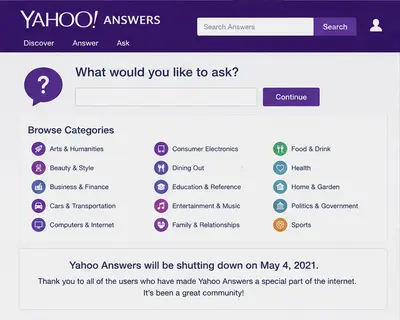
The community question-and-answer platform that became an internet institution.
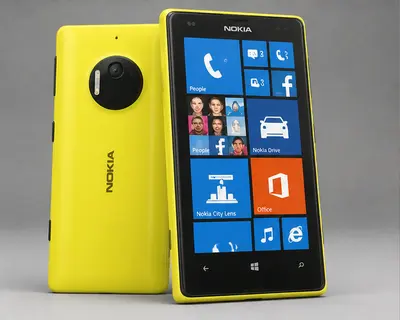
The Windows Phone smartphones that faded away.
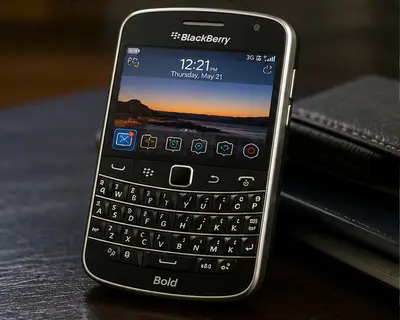
The executive keyboard phone of an era.
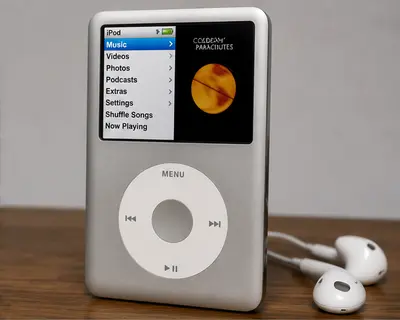
The hard-drive music player that defined an era.