The Fax Machine
The device that sent paper documents across telephone lines.
The fax machine was a device that scanned paper documents and transmitted them over telephone lines to be printed at another location.
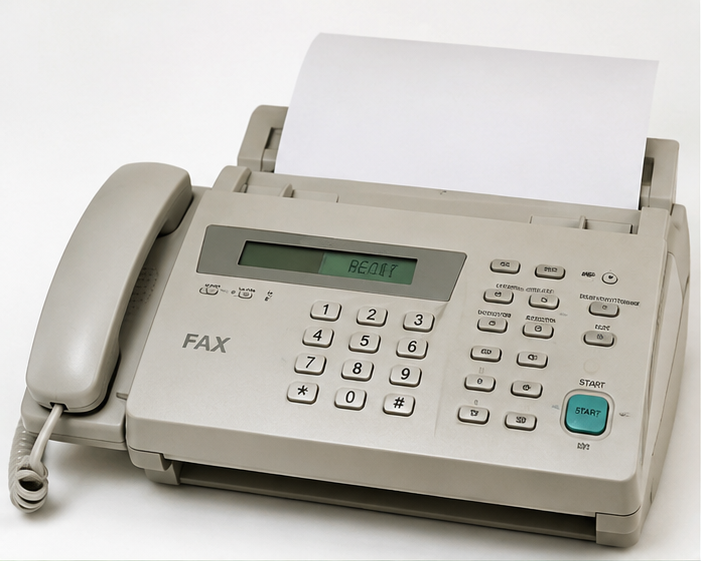
The fax machine (short for facsimile) was a device that scanned a paper document, sent the image over a telephone line, and printed a copy at the receiving machine. It became a key business tool for sending documents quickly across distances, especially before email became widespread. As email and digital documents spread, fax use declined, though it persisted in some sectors, and reports have noted the winding down of certain fax services in recent years.
Explore this story
The fax machine is a landmark example of a communication technology that connected offices before email. It was a device that scanned paper documents and transmitted them over telephone lines to be printed elsewhere.
Becoming a key business tool for sending documents quickly across distances, the fax machine's use declined as email and digital documents spread, though it persisted in some sectors. Reports have noted the winding down of certain fax services in recent years.
This is the story of the device that sent paper documents across telephone lines.
- Mid-20th centuryFax reaches business use
Fax machines come into business use.
Fax machines came into wider business use in the mid-20th century.
Allowed documents to be sent over phone lines.
A copy printed out at the receiving end.
- 1980sA business standard
Fax machines become common in offices.
Fax machines became a common and important office tool.
Sped up sending documents across distances.
Businesses relied on faxes for quick paperwork.
- 1980s-1990sWidespread use
Fax use spreads widely.
Fax machines were widely used for business and official documents.
Central to office communication before email.
Signed documents could be sent quickly.
- 1990s-2000sEmail rises
Email and digital documents spread.
Email and digital documents offered faster, easier sharing.
Began to replace the fax for many uses.
Digital files did not need paper or phone lines.
- Recent yearsFax use declines
Fax use declines and some services wind down.
Fax use declined, though it persisted in some sectors; reports have noted the winding down of certain fax services in recent years.
Marked the fading of fax as a mainstream tool.
Some fields kept faxes for legal or security reasons.
- TodayA legacy tool
Fax survives in niches and memory.
Fax persists in some specialized fields and is widely remembered.
Represents pre-email document sending.
Some sectors still use fax for specific needs.
Fax Reaches Business Use
In the mid-20th century, fax machines came into wider business use, allowing documents to be sent over phone lines. A copy printed out at the receiving end.
A Business Standard
Through the 1980s, fax machines became a common and important office tool, speeding up sending documents across distances. Businesses relied on faxes for quick paperwork.
Widespread Use
Through the 1980s and 1990s, fax machines were widely used for business and official documents, central to office communication before email. Signed documents could be sent quickly.
Email Rises
Through the 1990s and 2000s, email and digital documents spread, offering faster, easier sharing. Not needing paper or phone lines, digital files began to replace the fax for many uses.
Fax Use Declines
In recent years, fax use declined, though it persisted in some sectors, and reports have noted the winding down of certain fax services. Some fields kept faxes for legal or security reasons.
A Legacy Tool
Today, fax survives in niches and memory, persisting in some specialized fields and widely remembered. Representing pre-email document sending, some sectors still use fax for specific needs.
- The fax machine scanned paper documents.
- Fax is short for facsimile.
- It transmitted documents over telephone lines.
- It printed a copy at the receiving machine.
- It sent documents quickly across distances.
- It was a key business tool, especially before email.
- It was widely used in offices.
- It was valued for sending signed and printed documents.
- Fax is short for facsimile.
- The fax machine scanned paper documents.
- It transmitted documents over telephone lines.
- It printed a copy at the receiving machine.
- It was a key business tool, especially before email.
- It was valued for sending signed and printed documents.
- It came into wider business use in the mid-20th century.
- It was central to office communication before email.
The fax machine sent digital email.
It scanned paper and sent images over telephone lines.
Fax machines are completely gone.
They persist in some specialized fields.
The fax had little importance.
It was a key business tool for sending documents.
It declined for no clear reason.
Email and digital documents were faster and easier.
Everything about it is detailed here.
Some specifics are kept general.
It could not send signed documents.
Signed, printed documents could be sent quickly.
No sector uses fax now.
Some fields keep it for legal or security reasons.
It did not use telephone lines.
It transmitted over telephone lines.
It left no legacy.
It shaped document sending before email.
Email played no role in its decline.
Email and digital documents replaced it for many uses.
Note: To respect strict accuracy, verbatim quotations are omitted here because exact wording cannot be verified in this draft. The fax machine's story is closely associated with themes of business communication, sending documents across distances, and the era before email.
The fax machine's legacy is being a key tool for sending documents quickly before email. Though largely replaced, it persists in some specialized fields and is remembered as a defining technology of 20th-century business communication.
The fax machine influences how people understand the history of business communication. Its rise and decline illustrate the shift from sending paper images over phone lines to instant digital documents.
- Did you know fax is short for facsimile?
- Did you know the fax machine scanned paper documents?
- Did you know it transmitted documents over telephone lines?
- Did you know it printed a copy at the receiving machine?
- Did you know it sent documents quickly across distances?
- Did you know it was a key business tool before email?
- Did you know it was widely used in offices?
- Did you know it was valued for sending signed documents?
Compared with email, the fax machine sent images of paper documents over phone lines rather than digital files, and required physical paper at both ends. It is a clear example of a business technology largely replaced by digital methods, yet surviving in specific fields.
- Science
- Not directly applicable.
- Technology
- It advanced document transmission over phone lines.
- Business
- It was central to business document sending.
- Politics
- Not directly applicable.
- Culture
- It was a familiar part of office life.
- Education
- It is used to teach about communication history.
- Society
- It sped up sending documents across distances.
- Environment
- Not directly applicable.
- General books on communication technology.
- Books on business and office history.
- Works on telecommunications history.
- Documentary topics on communication history.
- Features on business technology.
- Programs on the shift from fax to email.
Fax reaches business use (mid-20th century); a business standard (1980s); widespread use (1980s-1990s); email rises (1990s-2000s); fax use declines (recent years); a legacy tool (today).
- Fax machines reaching wider business use in the mid-20th century.
- The fax becoming a business standard in the 1980s.
- Widespread fax use in the 1980s and 1990s.
- The rise of email and digital documents.
- Email replacing fax for many uses.
- The reported winding down of some fax services.
- Continued use in specialized fields.
- Its survival for legal and security needs.
- Its place in communication history.
- Its status as a symbol of pre-email document sending.
The exact dates and details of fax history and the winding down of services vary by country and provider. This article presents these points neutrally and avoids stating uncertain specifics as fact.
Not applicable. As a communication device, the fax machine did not receive awards, but it holds a notable place in communication history.
The fax machine was a very popular business tool, especially in the 1980s and 1990s, and remains widely recognized and remembered as a key way of sending documents before email.
In 2026, the fax machine remains a reminder of how businesses sent documents before email, and its continued use in some fields shows how legacy technology can persist for specific needs.
1. Fax is short for?
2. The fax machine transmitted documents over?
3. It printed a copy at the?
Did You Know: A fax machine sent an image of a document over a telephone line, printing a copy at the other end. Imagine If: To send a signed page across the country in minutes, you feed it into a machine connected to a phone line - that was the fax. Historic Moment: The reported winding down of certain fax services in recent years. On This Day: In recent years - reports note the winding down of certain fax services.
Short Summary: The fax machine sent paper documents over telephone lines and was a key business tool before email; it persists in some fields today.
Medium Summary: The fax machine (short for facsimile) was a device that scanned a paper document, sent the image over a telephone line, and printed a copy at the receiving machine. It became a key business tool for sending documents quickly across distances, especially before email became widespread. As email and digital documents spread, fax use declined, though it persisted in some sectors, and reports have noted the winding down of certain fax services in recent years.
Long Summary: In the mid-20th century, fax machines came into wider business use, allowing documents to be sent over phone lines and printed at the receiving end. Through the 1980s they became a business standard, speeding up sending documents across distances, and through the 1980s and 1990s they were widely used for business and official documents, central to office communication before email. Through the 1990s and 2000s, email and digital documents spread, offering faster, easier sharing and beginning to replace the fax for many uses. In recent years, fax use declined, though it persisted in some sectors for legal or security reasons, and reports have noted the winding down of certain fax services. Today fax survives in some specialized fields and is widely remembered as a symbol of pre-email document sending. Some specifics are kept general.
People searching for the fax machine usually want to know what it was, how it worked, why it declined, and whether it is still used.
- 1.Reputable telecommunications history references
- 2.Official statements from fax and telecom service providers
- 3.Encyclopaedia Britannica or comparable references
- 4.Peer-reviewed communication technology sources
Related timelines

The e-commerce platform empowering online merchants.
A pioneer of cloud file storage and syncing.
A leader in modern video conferencing.
The company behind Snapchat and camera-based social media.

The world's largest professional networking service.
The Windows Phone smartphones that faded away.