The Kodak Carousel Projector
The rotating slide projector that defined the home slide show.
The Kodak Carousel projector was a slide projector that held photographic slides in a rotating circular tray, making it a centerpiece of mid-century home slide shows.
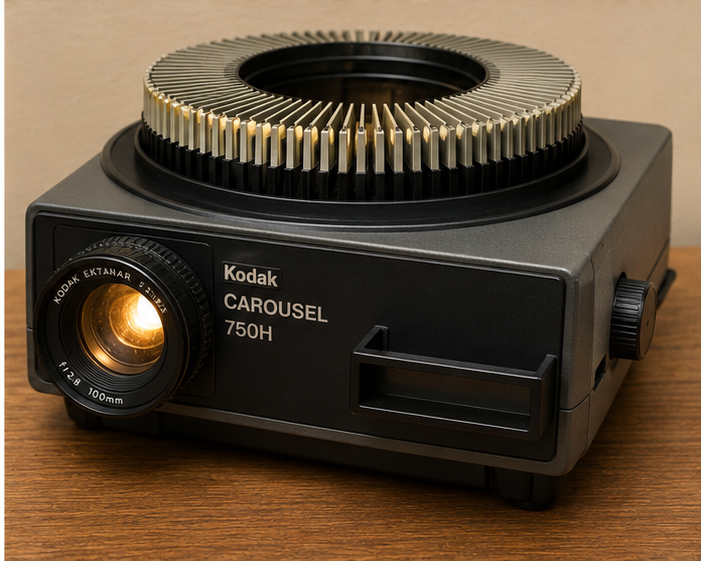
The Kodak Carousel projector was a line of slide projectors introduced by Kodak in the early 1960s. Its signature feature was a rotating circular tray that held many slides and dropped each one into place for projection. It became a defining tool of mid-century home slide shows, letting families project their photographs onto a screen or wall. As digital photography and digital displays took over, slide projectors declined, and Kodak ended production of Carousel-type projectors, with 2004 commonly cited.
Explore this story
The Kodak Carousel projector is a landmark example of a technology that shaped how families shared photographs and then gave way to digital tools. It was a slide projector that held photographic slides in a rotating circular tray.
Becoming a defining tool of mid-century home slide shows, the Carousel let families project their photographs onto a screen or wall. As digital photography and displays took over, slide projectors declined, and Kodak ended production of Carousel-type projectors, with 2004 commonly cited.
This is the story of the rotating slide projector that defined the home slide show.
- Early 1960sThe Carousel arrives
Kodak introduces the Carousel projector.
Kodak introduced the Carousel slide projector in the early 1960s.
Made home slide shows easier and more reliable.
Its rotating tray was its signature feature.
- 1960sThe home slide show
The Carousel becomes central to slide shows.
Families used the Carousel to project photographs at home.
Defined mid-century home photo sharing.
The rotating tray dropped each slide into place.
- 1960s-1980sA household staple
The Carousel is widely used.
The Carousel was widely used for family and travel photos.
Central to sharing photographs before digital.
Slide shows became a common social occasion.
- 1990s-2000sDigital photography rises
Digital photos and displays emerge.
Digital photography and digital displays offered new ways to share images.
Began to replace slide projectors.
Digital images needed no physical slides.
- Around 2004Production ends
Kodak ends Carousel-type projector production.
Kodak ended production of Carousel-type projectors, with 2004 commonly cited.
Marked the end of the Carousel era.
Digital sharing had become common.
- TodayA remembered icon
The Carousel is widely remembered.
The Kodak Carousel is remembered as an icon of the home slide show.
Represents mid-century photo sharing.
Some enthusiasts still use slide projectors.
The Carousel Arrives
In the early 1960s, Kodak introduced the Carousel slide projector, making home slide shows easier and more reliable. Its rotating tray was its signature feature.
The Home Slide Show
Through the 1960s, families used the Carousel to project photographs at home, defining mid-century home photo sharing. The rotating tray dropped each slide into place.
A Household Staple
From the 1960s into the 1980s, the Carousel was widely used for family and travel photos, central to sharing photographs before digital. Slide shows became a common social occasion.
Digital Photography Rises
Through the 1990s and 2000s, digital photography and digital displays offered new ways to share images, beginning to replace slide projectors. Digital images needed no physical slides.
Production Ends
Around 2004, Kodak ended production of Carousel-type projectors, marking the end of the Carousel era, as digital sharing had become common.
A Remembered Icon
Today, the Kodak Carousel is remembered as an icon of the home slide show. Representing mid-century photo sharing, some enthusiasts still use slide projectors.
- The Kodak Carousel projector was a slide projector.
- It was made by Kodak.
- It was introduced in the early 1960s.
- It used a rotating circular slide tray.
- It held many slides at once.
- It dropped each slide into place for projection.
- It projected photographs onto a screen or wall.
- It was a centerpiece of home slide shows.
- The Kodak Carousel projector was made by Kodak.
- It was introduced in the early 1960s.
- It used a rotating circular slide tray.
- It held many slides at once.
- It dropped each slide into place for projection.
- It projected photographs onto a screen or wall.
- It defined mid-century home photo sharing.
- It made home slide shows easier and more reliable.
The Carousel used a straight slide tray.
Its signature feature was a rotating circular tray.
Carousel-type projectors are still in production.
Kodak ended production, with 2004 commonly cited.
It had little cultural impact.
It defined mid-century home slide shows.
It faded for no clear reason.
Digital photography and displays replaced slide projectors.
Everything about it is detailed here.
Some specifics are kept general.
It could hold only one slide.
It held many slides in the rotating tray.
It was not made by Kodak.
It was a Kodak product.
No one uses slide projectors now.
Some enthusiasts still use them.
It left no legacy.
It shaped how families shared photographs.
Digital images needed slides.
Digital images needed no physical slides.
Note: To respect strict accuracy, verbatim quotations are omitted here because exact wording cannot be verified in this draft. The Kodak Carousel's story is closely associated with themes of home slide shows, family photographs, and mid-century photo sharing.
The Kodak Carousel projector's legacy is defining the mid-century home slide show and shaping how families shared photographs. Though replaced by digital tools, it is remembered as an icon of home photo sharing before the digital age.
The Kodak Carousel influences how people understand the history of photo sharing. Its rise and decline illustrate the shift from projecting physical slides to sharing digital images on screens.
- Did you know the Kodak Carousel projector was made by Kodak?
- Did you know it was introduced in the early 1960s?
- Did you know it used a rotating circular slide tray?
- Did you know it held many slides at once?
- Did you know it dropped each slide into place for projection?
- Did you know it projected photographs onto a screen or wall?
- Did you know it was a centerpiece of home slide shows?
- Did you know it defined mid-century home photo sharing?
Compared with digital photo sharing, the Kodak Carousel projected physical slides from a rotating tray rather than displaying digital images on a screen. It is a clear example of a beloved analog technology replaced by digital methods.
- Science
- Not directly applicable.
- Technology
- It advanced home slide projection.
- Business
- It was a notable Kodak product line.
- Politics
- Not directly applicable.
- Culture
- It made the home slide show a social ritual.
- Education
- It is used to teach about photography and technology history.
- Society
- It shaped how families shared photographs.
- Environment
- Not directly applicable.
- General books on the history of photography.
- Books on Kodak and consumer imaging.
- Works on mid-century home technology.
- Documentary topics on photography history.
- Features on Kodak and imaging.
- Programs on mid-century home life.
The Carousel arrives (early 1960s); the home slide show (1960s); a household staple (1960s-1980s); digital photography rises (1990s-2000s); production ends (around 2004); a remembered icon (today).
- Kodak introducing the Carousel in the early 1960s.
- The Carousel becoming central to home slide shows.
- Its role as a household staple.
- The rise of digital photography and displays.
- Digital tools replacing slide projectors.
- Kodak ending Carousel-type production around 2004.
- Continued use by enthusiasts.
- Its lasting status as an icon of the home slide show.
- Its place in photography history.
- Its role in mid-century photo sharing.
The exact dates and details of Carousel history and the end of production are discussed among observers. This article presents these points neutrally and avoids stating uncertain specifics as fact.
Not applicable in a formal sense here. The Kodak Carousel was well regarded and widely used, but specific awards are not listed to avoid unverified claims.
The Kodak Carousel projector was enormously popular for home slide shows and remains widely recognized and remembered as an icon of mid-century photo sharing.
In 2026, the Kodak Carousel remains a reminder of how families shared photographs before digital screens, and of the social ritual of the home slide show.
1. The Kodak Carousel was a?
2. It was made by?
3. It was introduced in the?
Did You Know: The Kodak Carousel's rotating tray dropped each slide into place, making home slide shows smooth and reliable. Imagine If: The family gathers as photos click one by one onto the wall from a spinning tray - that was the Carousel slide show. Historic Moment: Kodak ending production of Carousel-type projectors around 2004. On This Day: Around 2004 - Kodak ends production of Carousel-type projectors.
Short Summary: The Kodak Carousel projector was the rotating slide projector that defined mid-century home slide shows; production ended around 2004.
Medium Summary: The Kodak Carousel projector was a line of slide projectors introduced by Kodak in the early 1960s. Its signature feature was a rotating circular tray that held many slides and dropped each one into place for projection. It became a defining tool of mid-century home slide shows, letting families project their photographs onto a screen or wall. As digital photography and displays took over, slide projectors declined, and Kodak ended production of Carousel-type projectors, with 2004 commonly cited.
Long Summary: In the early 1960s, Kodak introduced the Carousel slide projector, making home slide shows easier and more reliable with its signature rotating circular tray. Through the 1960s, families used the Carousel to project photographs at home, defining mid-century home photo sharing, and from the 1960s into the 1980s it was widely used for family and travel photos, with slide shows becoming a common social occasion. Through the 1990s and 2000s, digital photography and displays offered new ways to share images and began to replace slide projectors, and around 2004 Kodak ended production of Carousel-type projectors as digital sharing became common. Today the Kodak Carousel is remembered as an icon of the home slide show, with some enthusiasts still using slide projectors. Some specifics are kept general.
People searching for the Kodak Carousel usually want to know what it was, how it worked, why it was iconic, and when production ended.
- 1.Official Kodak historical references
- 2.Reputable photography and technology history sources
- 3.Encyclopaedia Britannica or comparable references
- 4.Museums of photography and technology
Related timelines
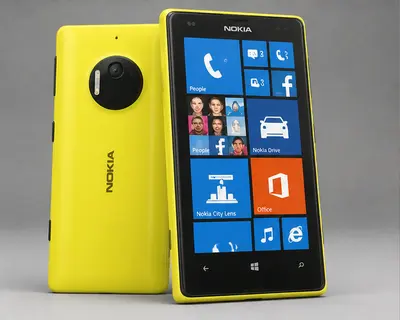
The Windows Phone smartphones that faded away.

The executive keyboard phone of an era.
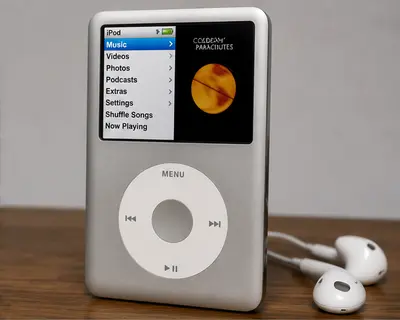
The hard-drive music player that defined an era.

The portable data disk that became the "Save" icon.
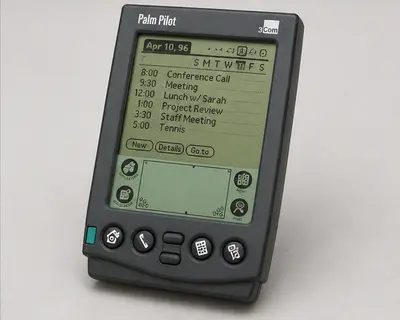
The pocket organizer that pioneered the handheld digital assistant.

The early smart glasses that put a tiny display before your eye.