Vladimir Putin — The Intelligence Officer Who Became Russia's Dominant Leader
The story of a rise to power — from a KGB career and St. Petersburg politics to the Kremlin, where he has led Russia as president and prime minister for more than two decades.
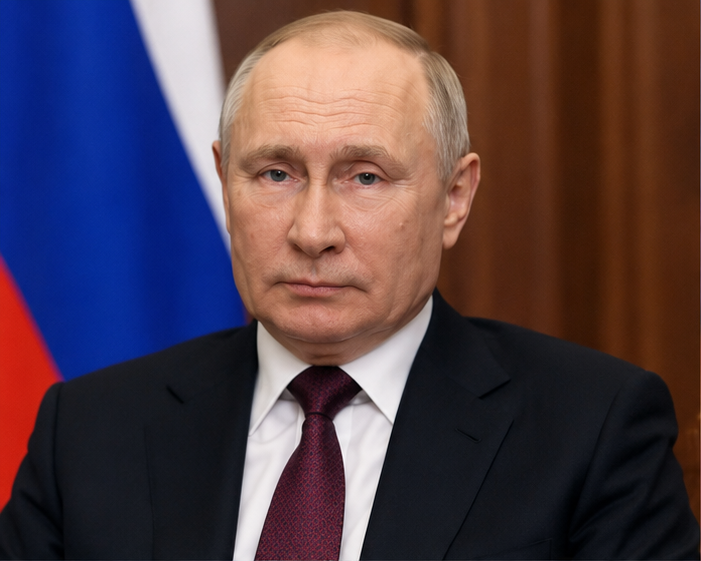
Vladimir Putin rose from a career in Soviet intelligence to become the central figure in Russian politics of the 21st century. Serving as both president and prime minister, he has shaped Russia's government, economy, and foreign policy while remaining a controversial figure internationally. This is a neutral, verified timeline of Vladimir Putin.
Milestones
Vladimir Putin is born.
Putin trains as a lawyer.
Putin serves as an intelligence officer.
Putin joins the city government.
Putin joins the federal government.
Putin takes senior security posts.
Putin becomes head of government.
Putin takes over after Yeltsin resigns.
Putin wins his first presidential election.
Putin shifts roles under term limits.
Putin is elected president again.
- October 7, 1952Born in Leningrad
Vladimir Putin is born.
- University yearsStudies Law in Leningrad
Putin trains as a lawyer.
- 1975–1990Career in the KGB
Putin serves as an intelligence officer.
- Early 1990sEnters St. Petersburg Politics
Putin joins the city government.
- 1996Moves to Moscow
Putin joins the federal government.
- 1998–1999Leads the FSB and Security Council
Putin takes senior security posts.
- August 1999Appointed Prime Minister
Putin becomes head of government.
- December 31, 1999Becomes Acting President
Putin takes over after Yeltsin resigns.
- 2000Elected President
Putin wins his first presidential election.
- 2008–2012Serves as Prime Minister Again
Putin shifts roles under term limits.
- 2012Returns to the Presidency
Putin is elected president again.
Explore this story
Vladimir Putin is a Russian politician and former intelligence officer who has dominated his country's political life since 1999. He has served as president of Russia and, during an interval, as prime minister, making him one of the longest-serving leaders in modern Russian history.
Born in Leningrad (now St. Petersburg) in 1952, Putin studied law and then spent some 15 years as a foreign intelligence officer in the KGB, the Soviet Union's security and intelligence agency, including a posting in Dresden, East Germany. After leaving the KGB, he entered politics in St. Petersburg before moving to Moscow.
Rising quickly through government, Putin was appointed prime minister in 1999 and became acting president after Boris Yeltsin's resignation. He has since alternated between the presidency and the premiership, exercising centralized power.
This timeline presents documented events of his life and career in a neutral manner, with major facts cross-checked against authoritative sources. Where matters are contested, this is noted.
- October 7, 1952Born in Leningrad
Vladimir Putin is born.
Vladimir Vladimirovich Putin was born on October 7, 1952, in Leningrad, U.S.S.R. (now St. Petersburg, Russia).
The birth of a future long-serving Russian leader.
The city of his birth was later renamed St. Petersburg.
- University yearsStudies Law in Leningrad
Putin trains as a lawyer.
Putin studied law at Leningrad State University, where his tutor was Anatoly Sobchak, later a leading reform politician of the perestroika era.
Laid the groundwork for his later career.
Sobchak would become an important early mentor.
- 1975–1990Career in the KGB
Putin serves as an intelligence officer.
Putin spent about 15 years as a foreign intelligence officer in the KGB, the Soviet Union's security and intelligence agency, including a posting in Dresden, East Germany.
Defined his early professional life.
He retired from active KGB service in 1990 with the rank of lieutenant colonel.
- Early 1990sEnters St. Petersburg Politics
Putin joins the city government.
After leaving the KGB, Putin became an adviser to Anatoly Sobchak, the first democratically elected mayor of St. Petersburg, and rose to the post of first deputy mayor by 1994.
Marked his entry into government.
He became known for his ability to get things done.
- 1996Moves to Moscow
Putin joins the federal government.
In 1996, Putin moved to Moscow and joined the administration of President Boris Yeltsin, working his way up through senior positions.
Brought him to the center of national power.
He would rise rapidly over the next few years.
- 1998–1999Leads the FSB and Security Council
Putin takes senior security posts.
Putin briefly served as director of the Federal Security Service (FSB), a successor to the KGB, and as secretary of the Security Council of Russia.
Placed him among the country's top officials.
These roles preceded his rapid rise to national leadership.
- August 1999Appointed Prime Minister
Putin becomes head of government.
In August 1999, President Yeltsin appointed Putin prime minister, and Yeltsin later chose him as his successor.
Set the stage for his rise to the presidency.
His public profile rose sharply during this period.
- December 31, 1999Becomes Acting President
Putin takes over after Yeltsin resigns.
When Boris Yeltsin resigned on December 31, 1999, Putin became acting president of Russia.
The beginning of his long tenure at the top of Russian politics.
His first official act as president was to grant Yeltsin a pardon.
— A Leningrad Upbringing (1952–1975)
Born in Leningrad in 1952, Putin studied law at Leningrad State University, where his tutor was the future reform politician Anatoly Sobchak.
— The Intelligence Years (1975–1990)
Putin spent about 15 years as a KGB foreign intelligence officer, including a posting in Dresden, East Germany, retiring from active service in 1990 as a lieutenant colonel.
— From City Hall to the Kremlin (1990–1999)
Putin advised St. Petersburg mayor Anatoly Sobchak and became first deputy mayor by 1994. He moved to Moscow in 1996, held senior security posts, and was appointed prime minister in August 1999.
— Two Decades of Power (1999–present)
After Yeltsin resigned at the end of 1999, Putin became acting president, was elected in 2000 and 2004, served as prime minister from 2008 to 2012, and returned to the presidency in 2012, remaining Russia's dominant political figure.
- Putin was born in Leningrad in 1952.
- His birthplace is now called St. Petersburg.
- He studied law at university.
- His tutor was reform politician Anatoly Sobchak.
- He served about 15 years in the KGB.
- He was posted in Dresden, East Germany.
- He retired from the KGB in 1990.
- He held the rank of lieutenant colonel.
- His full name is Vladimir Vladimirovich Putin.
- He was born on October 7, 1952.
- His birthplace, Leningrad, is now St. Petersburg.
- He studied law at Leningrad State University.
- His university tutor was Anatoly Sobchak.
- He served about 15 years as a KGB foreign intelligence officer.
- He was posted for a period in Dresden, East Germany.
- He retired from active KGB service in 1990 as a lieutenant colonel.
Putin was always a politician
He began his career as a KGB intelligence officer.
He was born in Moscow
He was born in Leningrad, now St. Petersburg.
He has only ever been president
He has also served as prime minister.
He entered national politics directly
He first worked in St. Petersburg's city government.
He never worked abroad
He was posted in Dresden, East Germany, with the KGB.
He rose slowly to power
His rise from the late 1990s was notably rapid.
He was elected president in 1999
He became acting president in 1999 and was elected in 2000.
He served continuously as president
He served as prime minister from 2008 to 2012 due to term limits.
He had no mentors
Anatoly Sobchak was an important early mentor.
His role is minor internationally
He is a major and controversial figure in world affairs.
Note: Because official statements are often translated and politically framed, specific verbatim quotations are omitted here to avoid presenting unverified wording as fact.
Putin's public statements have frequently emphasized themes of Russian sovereignty, national strength, and stability.
His remarks on Russia's global role are widely reported, though exact wording varies across translations and sources.
Vladimir Putin's legacy is still unfolding and is assessed very differently around the world. As the dominant figure in Russian politics since 1999, he has centralized power, shaped the country's government and foreign policy, and become one of the most consequential and controversial world leaders of the early 21st century. This assessment is presented neutrally and factually.
Putin's influence is felt within Russia, where he has reshaped the political system, and internationally through Russia's foreign policy and its role in global affairs. His decisions have had significant effects on relations between Russia and other countries, making him a central figure in contemporary geopolitics.
- Did you know Putin was born in Leningrad in 1952?
- Did you know his birthplace is now St. Petersburg?
- Did you know he studied law at university?
- Did you know his tutor was Anatoly Sobchak?
- Did you know he served about 15 years in the KGB?
- Did you know he was posted in Dresden, East Germany?
- Did you know he retired from the KGB in 1990?
- Did you know he held the rank of lieutenant colonel?
Intelligence officer vs. head of state: Putin moved from the KGB to the leadership of Russia. President vs. prime minister: He has held both offices, alternating due to term limits. Yeltsin era vs. Putin era: He succeeded Boris Yeltsin and centralized power to a greater degree. Early career vs. later career: The St. Petersburg official became Russia's dominant national leader.
Putin's impact centers on the reshaping of Russian politics and the country's role in the world. By centralizing authority and directing Russia's foreign policy over more than two decades, he has significantly influenced the trajectory of Russia and its relations with other nations, making him a defining figure of contemporary geopolitics. This is stated neutrally.
"The Man Without a Face: The Unlikely Rise of Vladimir Putin" by Masha Gessen.
"Mr. Putin: Operative in the Kremlin" by Fiona Hill and Clifford Gaddy.
Reputable academic histories of modern Russia.
Balanced journalistic accounts of Russian politics.
- Documentary features on modern Russia and its leadership.
- News-network programs on Russian politics and international relations. (Specific titles omitted where accurate details could not be verified.)
1952 born in Leningrad → studies law under Anatoly Sobchak → c. 1975–1990 serves in the KGB, including in Dresden → 1990 retires as lieutenant colonel → early 1990s works in St. Petersburg government, first deputy mayor by 1994 → 1996 moves to Moscow → 1998–1999 leads the FSB and Security Council → August 1999 appointed prime minister → December 31, 1999 becomes acting president → 2000 elected president (reelected 2004) → 2008–2012 prime minister → 2012 returns to presidency (reelected 2018).
- Studying law under Anatoly Sobchak.
- Joining the KGB as an intelligence officer.
- Entering St. Petersburg politics after the KGB.
- Becoming first deputy mayor by 1994.
- Moving to Moscow in 1996.
- Leading the FSB and Security Council.
- Being appointed prime minister in August 1999.
- Becoming acting president after Yeltsin's resignation.
- Winning the 2000 presidential election.
- Returning to the presidency in 2012.
Vladimir Putin is a highly controversial figure internationally. His rule has drawn extensive criticism from many governments, opposition figures, journalists, and human-rights organizations over issues including political freedoms, the treatment of opponents and independent media, and Russia's foreign and military policies. Supporters credit him with restoring stability and national strength after the 1990s. This timeline reports the existence of these debates neutrally and factually; specific contested allegations that could not be reliably and neutrally verified here are omitted or noted as disputed rather than asserted.
As a head of state, Putin holds various state titles and honors within Russia and has received official honors from some other countries, while also facing sanctions and criticism from others. International recognition of him is deeply divided. This section notes his formal positions without endorsement or judgment.
Within Russia, Putin's public standing has been reported by various polls over the years, though independent measurement is complicated by the country's media environment. Internationally, he is one of the most closely watched and polarizing world leaders. This is stated neutrally.
As of 2026, Vladimir Putin remains a central figure in Russian politics and international affairs. His decisions continue to influence relations between Russia and other countries and the wider geopolitical landscape. This timeline presents his role factually and neutrally, without taking a political position.
1. In what year was Vladimir Putin born?
2. In what city was he born?
3. What did he study at university?
- 1952: Born in Leningrad (now St. Petersburg).
- c. 1975–1990: Serves in the KGB.
- 1999: Appointed prime minister; becomes acting president.
- 2000: Elected president.
- 2008–2012: Serves as prime minister.
- 2012: Returns to the presidency.
SHORT SUMMARY: Vladimir Putin (born 1952) is a Russian politician and former KGB officer who has dominated Russian politics since 1999, serving as both president and prime minister.
MEDIUM SUMMARY: Born in Leningrad (now St. Petersburg) in 1952, Putin studied law and served about 15 years as a KGB foreign intelligence officer, including a posting in Dresden, East Germany, before retiring in 1990 as a lieutenant colonel. He entered St. Petersburg politics, becoming first deputy mayor by 1994, then moved to Moscow in 1996 and rose through the federal government, briefly leading the FSB. Appointed prime minister in August 1999, he became acting president after Boris Yeltsin's resignation on December 31, 1999, and was elected president in 2000 and 2004. Due to term limits he served as prime minister from 2008 to 2012, then returned to the presidency in 2012 and was reelected in 2018.
LONG SUMMARY: Vladimir Vladimirovich Putin, born October 7, 1952 in Leningrad, U.S.S.R. (now St. Petersburg, Russia), is a Russian politician and former intelligence officer who has been the dominant figure in Russian politics since 1999. He studied law at Leningrad State University, where his tutor was the future reform politician Anatoly Sobchak, and then spent about 15 years as a foreign intelligence officer in the KGB, including a posting in Dresden, East Germany, retiring from active service in 1990 with the rank of lieutenant colonel. After returning to civilian life, he became an adviser to Sobchak, the first democratically elected mayor of St. Petersburg, and rose to first deputy mayor by 1994. In 1996 he moved to Moscow and joined President Boris Yeltsin's administration, later briefly serving as director of the Federal Security Service (FSB) and secretary of the Security Council. Appointed prime minister in August 1999, he became acting president when Yeltsin resigned on December 31, 1999, and one of his first acts was to grant Yeltsin a pardon. He was elected president in 2000 and reelected in 2004; because of constitutional limits on consecutive terms, he served as prime minister from 2008 to 2012 under Dmitry Medvedev before returning to the presidency in 2012 and being reelected in 2018. Known for centralizing political power, Putin is one of the most consequential and controversial world leaders of the early 21st century. This summary is presented neutrally.
- 1.Britannica — Vladimir Putin biography (early life, KGB career, political rise).
- 2.Britannica — Russia, "The Putin presidency" (government and terms in office).
- 3.Reputable international news organizations — reporting on his presidency and Russian affairs.
- 4.Academic and policy institutions specializing in Russian and Eurasian studies.
- 5.Established reference works on modern Russian history and politics.
Related timelines
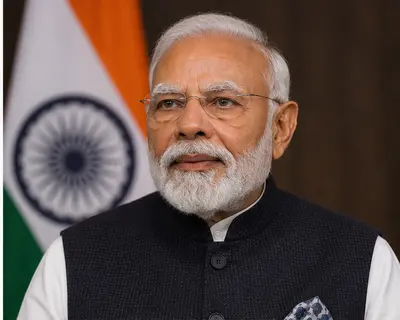
The story of an Indian politician — from Chief Minister of Gujarat to Prime Minister of India, one of the most prominent figures in the nation's modern political history.
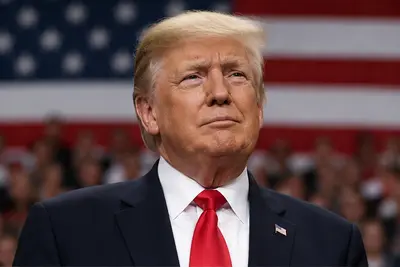
The story of a businessman and television personality who became the 45th and 47th President of the United States — one of the most consequential and debated figures in modern American history.
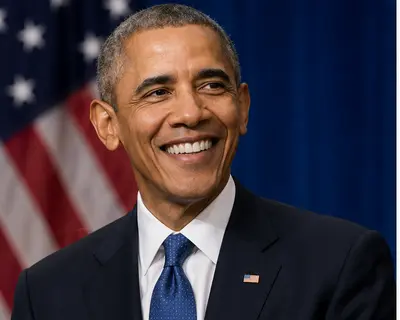
The story of the first African American president of the United States — from Hawaii and community organizing to the U.S. Senate and the White House.
The story of a long career in American public life — from decades in the U.S. Senate to the vice presidency and the presidency of the United States.

The story of a secretive succession — from an obscured early life to becoming the third leader of the Kim family and a central figure in global diplomacy and nuclear tensions.